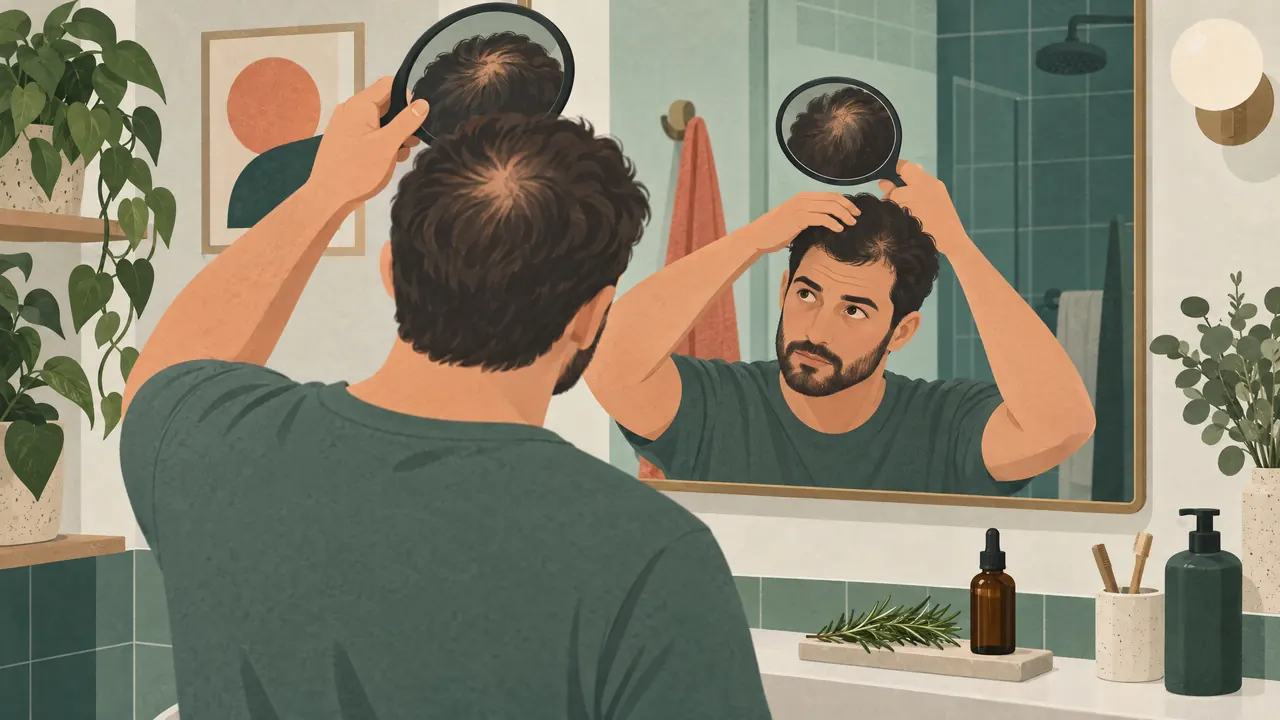
Say you’ve noticed a thinning crown in photos and started searching for propecia online. You probably want answers to practical questions: Does it work? What are the risks? Can an online clinician prescribe it safely, and is the generic just as good?
Propecia is the brand name for finasteride 1 mg, a prescription treatment for male pattern hair loss. It can slow further loss and help some men regrow hair, but it doesn’t work overnight or treat every cause of thinning. Hair loss isn’t a life sentence—and deciding against medication is a reasonable choice, too.
What to know before getting propecia online
Say your hairline has gradually receded, but you haven’t had anyone examine your scalp. The first step is confirming the likely cause, rather than choosing the cheapest prescription offer.
Male pattern hair loss, also called androgenetic alopecia, usually develops gradually around the temples, frontal scalp, or crown. Sudden shedding, bald patches, scalp pain, or significant redness may point to something else. Finasteride won’t correct every underlying problem.
Shuksan Health Care is an independent health-information site covering men’s health, hormones, nutrition, and infections; this article explains the medical and purchasing questions behind an online finasteride search.
A legitimate telehealth visit can be a useful starting point. You may submit scalp photographs and discuss your hair-loss pattern, medical history, medications, and treatment goals. But an uncertain diagnosis may require an in-person examination.
Practical step: Photograph your hairline and crown before the appointment. Note when thinning began, whether shedding increased suddenly, and any recent illness or medication changes.
How finasteride blocks DHT—and what the 1 mg dose means
Say you’ve heard that finasteride “lowers testosterone” and worry about what that means. Its main action is different: it reduces the conversion of testosterone into dihydrotestosterone, or DHT.
Finasteride inhibits an enzyme called 5-alpha reductase, particularly its type II form. In genetically susceptible scalp follicles, DHT contributes to miniaturization: hairs become finer, shorter, and less visible over time. Reducing DHT can slow that process.
The FDA’s Propecia prescribing information (2014) specifies 1 mg by mouth once daily, with or without food, for male pattern hair loss in men. A separate 5 mg finasteride dose is used for an enlarged prostate; it isn’t the standard hair-loss dose.
More isn’t automatically better. Don’t increase your dose because progress looks slow, or split higher-strength tablets unless your prescriber and pharmacist have specifically advised it.
Finasteride also isn’t a testosterone treatment. If you have symptoms that concern you, such as persistent low libido or fatigue, discuss them separately rather than assuming hair loss explains them. Our guide to signs of low testosterone explains why symptoms alone don’t establish that diagnosis.
How long does Propecia take to work?
Say you’ve taken finasteride for six weeks and your bathroom mirror looks unchanged. That doesn’t necessarily mean treatment has failed. Hair growth takes time.
The FDA prescribing information (2014) states that at least three months of daily use is generally necessary before benefit appears. In practice, your clinician may assess progress over roughly six to twelve months, depending on your starting point and response.
Kaufman and colleagues’ randomized trials, published in the Journal of the American Academy of Dermatology in 1998, found that finasteride improved hair-growth measures and slowed progression compared with placebo. Still, results vary. Keeping existing hair can be a meaningful benefit even without dramatic regrowth.
Evidence is stronger for crown and anterior mid-scalp thinning than for restoring deeply receded temples. The FDA label states that effectiveness for bitemporal recession hasn’t been established.
Use photographs, not daily mirror checks:
- Keep lighting, angle, hairstyle, and hair dryness consistent.
- Compare pictures every few months.
- Track missed doses and side effects alongside appearance.
Treatment usually needs to continue to maintain its effect. The FDA label (2014) states that stopping leads to reversal of the treatment effect within 12 months.
Sexual side effects deserve a clear discussion
Say maintaining sexual function matters more to you than improving hair density. That preference belongs in the prescribing conversation—not after treatment begins.
Finasteride can cause decreased libido, erectile difficulties, and ejaculation problems. In the FDA prescribing information (2014), 3.8% of men taking Propecia reported at least one of these drug-related sexual adverse effects during the first year, compared with 2.1% taking placebo.
That’s an absolute difference of 1.7 percentage points. These trial figures help frame the risk, but they don’t predict your individual response or fully describe symptoms reported after approval.
The FDA’s 2012 label update added reports of libido disorders, ejaculation disorders, and orgasm disorders that continued after discontinuation. It also added reports of male infertility or poor semen quality, with improvement or normalization reported after stopping.
Postmarketing reports cannot establish how often persistent symptoms occur or prove that the medication caused every reported case. But they shouldn’t be dismissed.
Before starting: Tell your clinician about existing sexual difficulties and fertility plans. If symptoms develop, contact the prescriber promptly to discuss stopping or changing treatment. Don’t add erectile-dysfunction medication on your own to compensate.
Other risks, mood changes, and precautions
Say you’re planning to start finasteride, but you’ve previously had depression or your partner is pregnant. These details can affect the safety discussion.
Depression and suicidal thoughts have been reported with finasteride. Tell your prescriber about your mental-health history and promptly report new or worsening mood symptoms. If you develop suicidal thoughts, get immediate help; in the United States, call or text 988, or call 911 if you’re in immediate danger.
Other symptoms that need medical attention include:
- Breast changes: A lump, nipple discharge, or persistent tenderness.
- Allergic symptoms: Hives or swelling; trouble breathing or swelling of the tongue or throat requires emergency care.
- Testicular pain or fertility concerns: Discuss these with your clinician rather than waiting indefinitely.
Finasteride can lower PSA, or prostate-specific antigen, a blood marker used in prostate evaluation. Tell anyone ordering or interpreting your PSA test that you take it—even if your prescription is only for hair loss.
The FDA label (2014) warns that pregnant people, or those who could become pregnant, should not handle crushed or broken tablets because of potential harm to a male fetus. Intact tablets have a coating that prevents contact during normal handling.
How to get finasteride legitimately through telehealth
Say a website offers finasteride with “no prescription needed” and promises guaranteed regrowth. Those are reasons to look elsewhere.
In the United States, oral finasteride requires a prescription. A legitimate online service connects you with a clinician authorized to treat patients in your state and sends an appropriate prescription to a licensed pharmacy. Requirements for remote assessment vary by state.
The FDA’s BeSafeRx guidance (2022) identifies safer online pharmacies as those that require a prescription, provide a U.S. address and telephone number, have a licensed pharmacist available, and are licensed by a state board of pharmacy.
Before paying, check:
- Who reviews your medical information and issues the prescription.
- Whether you can contact the clinician about side effects.
- Which pharmacy dispenses the medication and whether its license is verifiable.
- Consultation, medication, shipping, and automatic-renewal charges.
- How follow-up and cancellation work.
A questionnaire alone isn’t proof of a scam, but prescription approval shouldn’t be guaranteed. You should receive clear dosing instructions and a way to ask questions.
Generic finasteride is usually the practical choice
Say the brand costs substantially more than the generic, and you wonder whether that extra money buys better results. For FDA-approved generic finasteride, it generally doesn’t.
The FDA requires approved generics to have the same active ingredient, strength, dosage form, and route of administration as the reference drug, and to demonstrate bioequivalence. Inactive ingredients and appearance may differ.
Compare finasteride 1 mg tablets with Propecia 1 mg tablets, rather than comparing products by name alone. Ask the pharmacist about a specific ingredient if you have an allergy.
Other treatments may also deserve discussion, including topical minoxidil. Vitamins are different: they won’t reliably reverse male pattern hair loss without a relevant deficiency. If your shedding is diffuse or unexplained, our article on vitamin deficiencies and hair loss provides context for that conversation.
A prescription and realistic expectations make online treatment safer
Say you’re ready to treat thinning hair but don’t want an expensive, open-ended experiment. A useful plan starts with a likely diagnosis, an agreed review date, and clear instructions about side effects.
Finasteride 1 mg can help preserve hair and sometimes improve density. It requires patience, continued use, and an honest discussion of risks. An online prescription can be legitimate; bypassing medical review isn’t a safe shortcut.
Ask your clinician what improvement would count as success for you and when to reassess. Hair loss doesn’t have to define your future, and treatment should support your priorities—not pressure you into them.
Frequently asked questions
Can I get propecia online without a prescription?
In the United States, oral finasteride requires a prescription. A legitimate telehealth service uses a clinician authorized to treat patients in your state and a licensed pharmacy to dispense the medication.
How long does Propecia take to work?
At least three months of daily use is generally needed before benefit appears. Your clinician may assess progress over six to twelve months, and continued treatment is usually needed to maintain results.
What are the side effects of Propecia?
Finasteride can cause decreased libido, erectile difficulties, and ejaculation problems; persistent sexual symptoms after stopping have also been reported. Depression and suicidal thoughts have been reported, so discuss your mental-health history and promptly report mood changes.
Is generic finasteride as effective as Propecia?
FDA-approved generic finasteride must have the same active ingredient, strength, dosage form, and route of administration as the reference drug and demonstrate bioequivalence. Generic finasteride 1 mg is generally a lower-cost option, while inactive ingredients and appearance may differ.