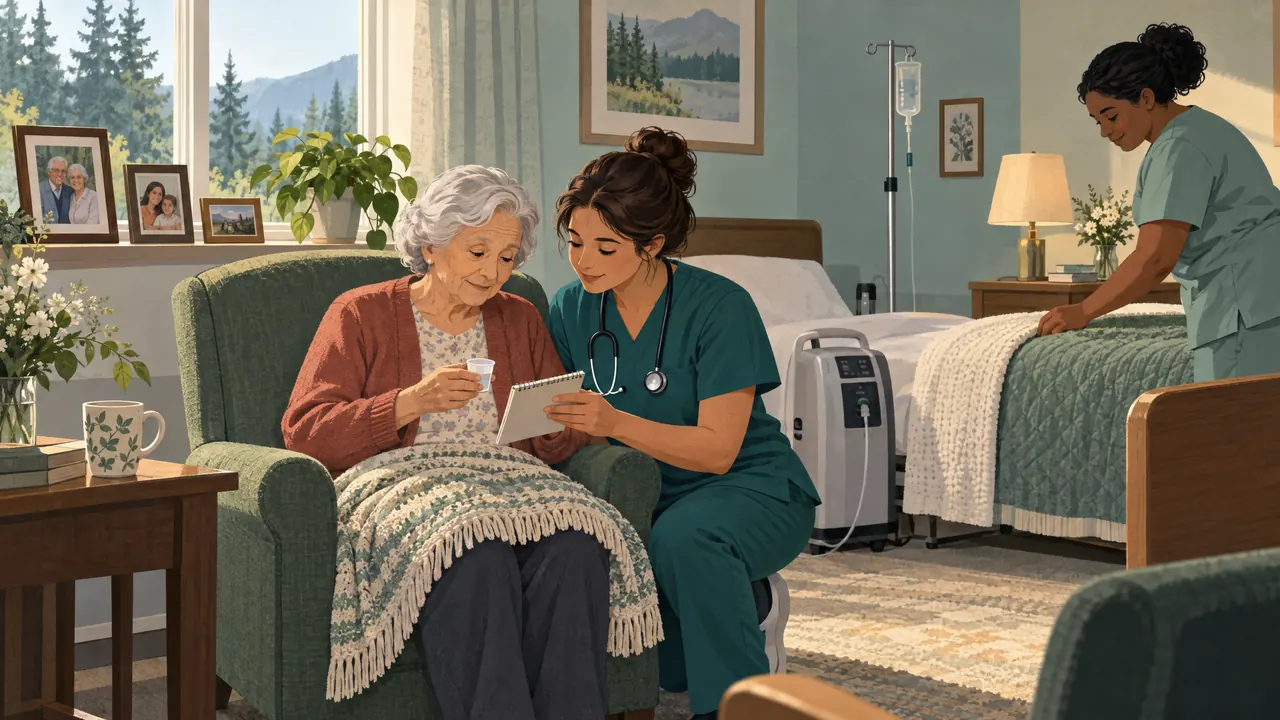
Say your mother is ready to leave the hospital, but she still needs wound care, oxygen or help managing medications. You may wonder, “Who will look after her overnight?” At Shuksan Healthcare Center, our skilled nursing services include nursing care around the clock, provided by licensed nurses and nursing assistants.
We’re a 52-bed skilled nursing facility in Bellingham, offering short-term rehabilitation after a hospital stay and long-term care. Before you choose a facility, ask the hospital team for a written description of the care your family member needs. That gives you a starting point for discussing nursing support and planning the next step.
What do skilled nursing services include?
Say your father leaves the hospital with several medications, diabetes care instructions and oxygen. You need to know who can help with those needs after discharge, and what information they’ll need from the hospital.
Our nursing care includes:
- Medication management
- Oxygen therapy
- Diabetes management
- Wound care, including negative-pressure wound therapy, often called a wound vac
- Tracheostomy care
- IV medications
We also have consulting nurses for complex wounds and mental health. Licensed nurses and nursing assistants provide nursing care 24 hours a day.
Before admission, share the hospital’s current care instructions with the receiving facility. Ask, “Can you meet these care needs, and what needs to be clarified before the transfer?” Specific instructions help the teams discuss equipment, treatments and ongoing care rather than relying on a general description such as “needs nursing.”
For questions about your family member’s needs or current bed availability, call us at (360) 733-9161.
What does “skilled need” mean?
Say your spouse can eat independently but needs IV medications after a hospital stay. You might ask, “Does needing skilled nursing mean they need help with everything?”
No. A skilled need is a medical or rehabilitation need that requires the knowledge and judgment of qualified professionals. Wound treatment, IV medications or therapy may be part of that need. A person can still do many everyday tasks independently while requiring skilled care for something specific.
Help with bathing, dressing or meals is valuable, too. But those needs alone aren’t the same as a skilled medical or rehabilitation need. Understanding that distinction helps you ask clearer questions about care and coverage.
Ask the hospital’s discharge planner, the person helping coordinate care after hospitalization: “What is the specific skilled need, and where is it documented?” Request the discharge instructions and current medication list. These documents help the receiving team understand what care must continue.
What does wound care nursing involve?
Say your mother has a surgical wound that hasn’t finished healing. You’ve seen a dressing change in the hospital, but you’re unsure what happens next.
Wound care involves more than replacing a bandage. Depending on the treatment orders, nursing care can include assessing the wound, checking the surrounding skin, providing prescribed treatment and watching for changes that need medical attention. Pain, drainage and the condition of the dressing can all be useful information.
At Shuksan, we provide wound care, including wound vac care, and have consulting nurses for complex wounds. A wound vac uses negative pressure through a specialized dressing to support wound treatment. Ask the nurse to explain the equipment and what your family member should report.
Useful questions include:
- What are the current wound care orders?
- What changes should we tell the nurse about right away?
- How will pain during treatment be addressed?
- Who reviews the wound if it changes?
- What care or supplies might be needed after discharge?
Don’t adjust a dressing or wound vac yourself unless the care team has instructed you to do so. Ask first. That helps keep treatment consistent with the care orders.
What should you ask the nurse at admission?
Say your father arrives with a hospital medication list, but you notice it differs from the medicines he took at home. Admission is a good time to flag that difference, even if you don’t know why it changed.
Bring the current hospital medication list, discharge instructions and any information about medication allergies or previous reactions. If you have an older medication list, label it clearly so it isn’t mistaken for the current one.
Ask the admitting nurse:
- “Which medications changed in the hospital, and what needs clarification?”
- “What nursing treatments are ordered now?”
- “What should Dad tell you about pain, breathing or other symptoms?”
- “How can we share concerns and request an update?”
Also share what helps your family member communicate. Perhaps they use hearing aids, need glasses to read instructions or have difficulty finding words. Practical details can make conversations easier.
Our admissions information is a useful starting point. Call (360) 733-9161 to discuss current availability and questions that depend on the individual situation.
How can families stay informed?
Say your spouse tells you a treatment changed, but they can’t remember the details. You want accurate information without making them repeat a conversation they didn’t fully understand.
Start by asking your family member how they want you involved. Then ask the facility how permission to share health information is documented and whom you should contact for updates. Don’t assume every relative will automatically receive the same information.
Families are welcome and encouraged to be involved at Shuksan. Our social services include care plan conferences, meetings with families to discuss care needs and plans, as well as connections to community resources.
Keep a short question log. Write down the concern, when you noticed it and what you need explained. “She seemed more uncomfortable during my visit yesterday” gives the team more useful context than “Something feels different.”
If you notice a concern during a visit, tell the nurse then rather than waiting for a scheduled conversation.
A clear nursing plan helps you choose the next step
Say your parent needs nursing care now, but hopes to return home. Ask what support may still be needed after discharge and what you should learn before taking on care at home.
Our in-house rehabilitation team includes physical, occupational and speech therapists. Therapists can assess home safety before discharge and train family members on car transfers. Our social services can also help arrange home health after discharge. Ask which supports apply to your family member’s plan.
You don’t have to arrive with every answer. Bring the hospital instructions and your questions so you can discuss the care that’s needed.
To talk with Shuksan Healthcare Center, call (360) 733-9161 or visit 1530 James Street, Bellingham, WA 98225. We’re in Bellingham’s York neighborhood, minutes off Interstate 5.
Frequently asked questions
What skilled nursing services does Shuksan provide?
Shuksan provides medication management, oxygen therapy, diabetes management, wound care, tracheostomy care and IV medications. Licensed nurses and nursing assistants provide nursing care 24 hours a day.
Does Shuksan provide wound vac care?
Shuksan provides wound care, including negative-pressure wound therapy, often called wound vac care. Consulting nurses are available for complex wounds.
What should I bring when my parent enters skilled nursing care?
Bring the current hospital medication list, discharge instructions and information about medication allergies or previous reactions. Clearly label any older medication list so it is not mistaken for the current one.