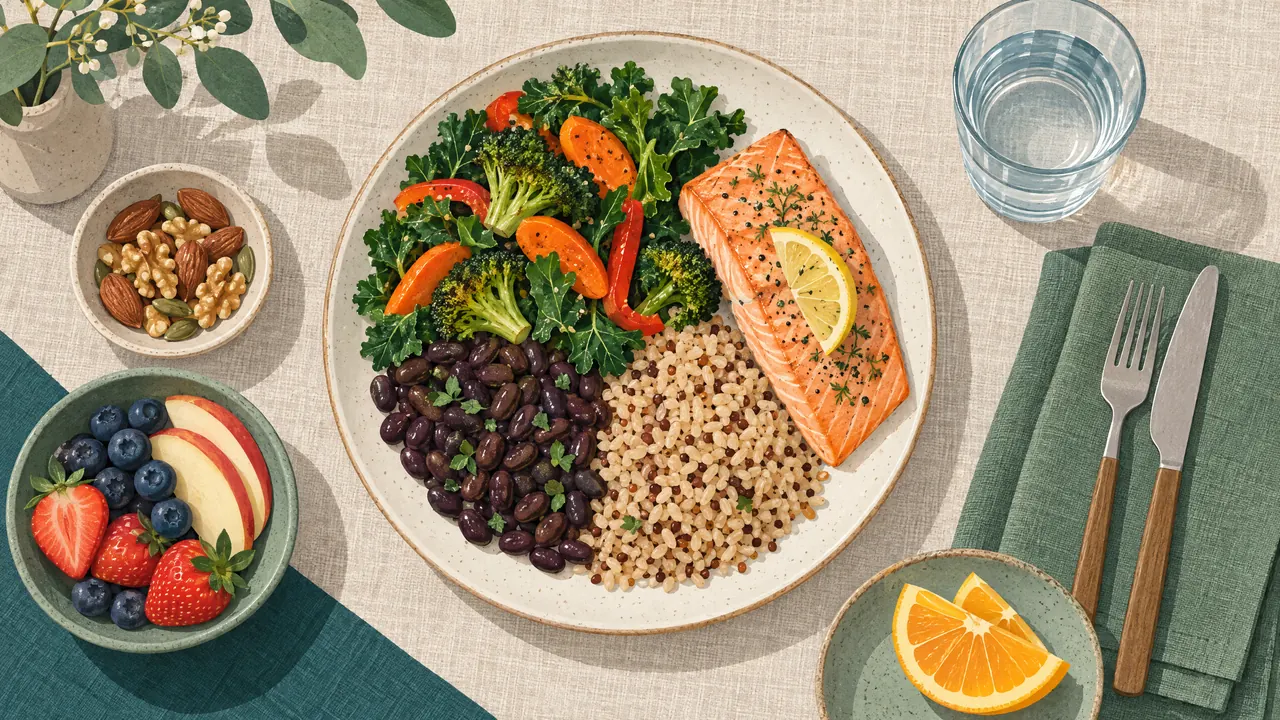
A chicken sandwich, a bowl of lentils, and Greek yogurt can all help you meet your protein needs. But their value depends on your overall diet, portion sizes, and activity—not a “high-protein” label. The benefits of lean protein include supporting muscle repair, making meals more filling, and helping you get enough protein without excessive saturated fat or calories.
You don’t need to eat like a bodybuilder. A useful approach is to choose protein foods you enjoy, set a reasonable daily target, and spread your intake across meals. Here’s how to make that work, including where leucine fits and when extra protein won’t help.
What are the benefits of lean protein?
Say you usually eat toast for breakfast and pasta for lunch, then pack most of your protein into dinner. Those meals may provide plenty of energy, but adding protein earlier can support muscle maintenance and make them more satisfying.
Protein supplies amino acids, the building materials your body uses to maintain muscle, skin, enzymes, and other tissues. “Lean” generally describes protein foods with relatively little fat, particularly saturated fat. It doesn’t mean fat-free, and it isn’t a guarantee that a food is nutritious.
At Shuksan Health Care, an independent health-information site covering men’s health, hormones, nutrition and infections, this article explains how everyday food choices support muscle and appetite without relying on supplement promises.
The practical advantage is efficiency: lean foods can deliver substantial protein without as many calories from fat. That helps if you’re managing weight while trying to preserve muscle. But it doesn’t mean higher-fat foods are unhealthy; salmon, nuts, and seeds offer nutrients worth keeping.
Start with one change. Add plain Greek yogurt to breakfast or beans to lunch rather than rebuilding your entire diet.
Which lean protein sources should you choose?
Say you’re shopping after work and comparing chicken, canned beans, and a protein bar. The best choice isn’t automatically the product with the biggest protein claim.
Useful options include:
- Skinless poultry: chicken or turkey breast, baked, grilled, or roasted.
- Fish and seafood: cod, pollock, shrimp, and tuna, with attention to mercury guidance where relevant.
- Lower-fat dairy: plain Greek yogurt, cottage cheese, and milk.
- Egg whites and whole eggs: whites provide protein with little fat; whole eggs supply other nutrients.
- Plant proteins: lentils, beans, edamame, tofu, and tempeh.
- Lean meat: trimmed cuts of beef or pork, with preparation and portion size in mind.
Preparation matters. Breaded, deep-fried chicken has a different nutritional profile from roasted chicken breast. A lean sandwich can also become high in calories or sodium through sauces, cheese, and processed meat.
Compare the Nutrition Facts labels. Look at protein, saturated fat, sodium, and serving size together—not protein alone.
Plant foods deserve a place, too. Beans and lentils provide fiber alongside protein, although they’re less protein-dense than many animal foods. Our guide to lean protein for muscle development explores that connection further.
How lean protein supports muscle protein synthesis
Say you finish a strength workout and wonder whether your muscles need chicken immediately. Protein helps with recovery, but you haven’t missed your chance if dinner is an hour away.
Muscle protein synthesis, or MPS, is the process of building new muscle proteins. It runs throughout the day. Resistance exercise and dietary amino acids stimulate it, helping your body repair and adapt to training.
Leucine is an essential amino acid that helps signal this process. Think of it as part of the starting signal, rather than all the building material. Your muscles still need the other essential amino acids to build protein.
In its position stand, the International Society of Sports Nutrition, by Jäger and colleagues (2017), recommends protein servings containing a balanced array of essential amino acids, including leucine. Dairy, eggs, meat, fish, and soy provide all the essential amino acids.
You don’t usually need to count leucine grams. Choose a substantial protein serving at meals, and use varied sources if you eat mostly plants. Adding isolated leucine to an otherwise low-protein diet won’t supply everything your muscles need.
And food isn’t the entire answer. Regular resistance training gives your body a reason to retain and build muscle; extra protein cannot replace that stimulus.
How much protein do you need per kilogram?
Say you weigh 165 pounds and want to get stronger. Advice such as “eat more protein” isn’t very useful until you translate it into a daily amount.
Protein targets are commonly expressed as grams per kilogram of body weight, written g/kg/day. Your needs depend on activity, age, health, and any ongoing weight loss.
Jäger and colleagues (2017) describe the adult recommended dietary allowance as 0.8 g/kg/day and recommend 1.4–2.0 g/kg/day for most exercising people. The allowance is a baseline for generally healthy adults, not a universal target for maximizing training gains.
For resistance training, Morton and colleagues’ 2018 meta-analysis in the British Journal of Sports Medicine found that protein supplementation’s additional benefit for fat-free mass plateaued at an estimated total intake of 1.62 g/kg/day. That’s an average estimate, not an exact threshold for everyone.
Here’s the calculation for someone weighing 165 pounds, approximately 75 kilograms:
| Daily target | Approximate protein amount |
|---|---|
| 0.8 g/kg | 60 grams |
| 1.4 g/kg | 105 grams |
| 1.6 g/kg | 120 grams |
| 2.0 g/kg | 150 grams |
For a generally healthy adult who regularly lifts weights, around 1.6 g/kg/day is a reasonable planning target. You don’t need to start at the highest amount.
If you have kidney disease, significant obesity, or a medical condition affecting nutrition, ask a clinician or registered dietitian which target—and which body weight—to use.
Spread protein across meals without watching the clock
Say you get 10 grams of protein at breakfast, 15 at lunch, and 80 at dinner. Your daily total may be adequate, but a more even pattern offers repeated opportunities to stimulate muscle protein synthesis.
Jäger and colleagues (2017) recommend general protein doses of 20–40 grams, ideally distributed every 3–4 hours, for exercising adults. These are sports-nutrition guidelines, not rules every reader must follow precisely.
Schoenfeld and Aragon’s 2018 review in the Journal of the International Society of Sports Nutrition proposed about 0.4 g/kg per meal across at least four meals as a strategy for muscle-building goals. For a 75-kilogram adult, that equals 30 grams per meal, or 120 grams daily.
Keep it flexible. You could use breakfast, lunch, dinner, and a snack, but three substantial meals can also help you reach your total.
An easy first step is to strengthen your lowest-protein meal. Pair oatmeal with Greek yogurt, add tofu to a vegetable bowl, or include cottage cheese with fruit. Dinner doesn’t have to carry the entire day.
Does lean protein help you feel full and manage weight?
Say lunch leaves you hungry again soon afterward. Adding protein may help, especially if the meal was mostly refined carbohydrates and lacked fiber.
Leidy and colleagues’ 2015 review in the American Journal of Clinical Nutrition describes evidence that higher-protein diets can improve fullness and support weight management. Individual responses vary, and long-term results depend partly on whether people can maintain their eating pattern.
Protein isn’t a weight-loss shortcut. Adding shakes on top of everything you already eat may increase calories rather than reduce them.
Try replacing part of a less-filling meal. Add lentils or chicken to soup, or swap a sugary breakfast pastry for yogurt with fruit and oats. Keep fiber-rich carbohydrates rather than removing them automatically; whole grains for maintaining a healthy weight can complement protein.
Seeds can help round out meals, too. Pumpkin seeds and men’s nutrition explains their uses, though seeds contain substantial fat and aren’t equivalent to lean poultry or low-fat dairy.
Lean protein works best with adequate food and regular strength training
Say you’ve increased protein but feel tired during workouts and aren’t getting stronger. The missing piece may be enough total food, carbohydrates, sleep, or progressive training—not another protein serving.
Build meals around a protein source, vegetables or fruit, and an appropriate carbohydrate portion. Include dietary fats as well. “Lean” shouldn’t become a reason to avoid all fat or underfuel your day.
Track your intake briefly if you’re unsure where you stand. Then use familiar portions instead of counting indefinitely.
If you have kidney disease, discuss protein changes with your clinician first. Unexplained weight loss, persistent weakness, or poor appetite also deserves medical evaluation rather than a supplement experiment.
The most useful approach is repeatable: meet a reasonable protein target, distribute it across meals, and pair it with strength training. More protein isn’t always better. Enough protein, consistently, is the goal.
Frequently asked questions
What are the benefits of lean protein?
Lean protein supplies amino acids that support muscle repair and tissue maintenance, and it can help meals feel more filling. It also helps you meet protein needs without excessive calories from fat or saturated fat.
What foods are good sources of lean protein?
Options include skinless poultry, white fish, shrimp, lower-fat dairy, beans, lentils, and tofu. Compare protein, saturated fat, sodium, and serving size, since preparation and added ingredients affect nutritional value.
How much lean protein should I eat each day?
Daily targets refer to total protein intake, not just lean sources: the adult recommended dietary allowance is 0.8 grams per kilogram of body weight. Most exercising adults may benefit from 1.4–2.0 grams per kilogram daily, with around 1.6 grams per kilogram a reasonable planning target for regular resistance training. People with kidney disease or conditions affecting nutrition should ask a clinician about an appropriate target.
Does lean protein help with weight loss?
Lean protein may improve fullness and help preserve muscle during weight management. Weight loss still depends on overall calorie intake and a sustainable eating pattern; adding protein shakes without adjusting other foods can increase calories.