Hair Loss
Propecia Online: Benefits, Risks, and Safe Prescribing
Finasteride can slow male pattern hair loss, but results take months. Learn what to discuss with a clinician and how to check an online prescription …
Hair loss in men usually follows a genetic pattern, while sudden shedding often has another cause. Knowing which one you have decides what's worth trying.
Finasteride can slow male pattern hair loss, but results take months. Learn what to discuss with a clinician and how to check an online prescription …
Vitamin D deficiency is associated with hair loss, while rare biotin deficiency can cause it. Learn how nutrient shortfalls differ from other causes …
Rosemary oil has limited evidence for pattern hair loss. Learn what the research shows, why rosemary water is different, and how to protect your …
Most treatments are bought before anyone has worked out the cause. Wikipedia’s article on pattern hair loss notes that male pattern baldness affects about half of men by age 50. Say a 29-year-old barista sees a thinner crown and tries biotin gummies for six months. If his loss is genetic, a vitamin won’t change the pattern.
Our hair loss articles help you sort out the type first, then compare options such as finasteride, minoxidil and rosemary oil on the evidence.
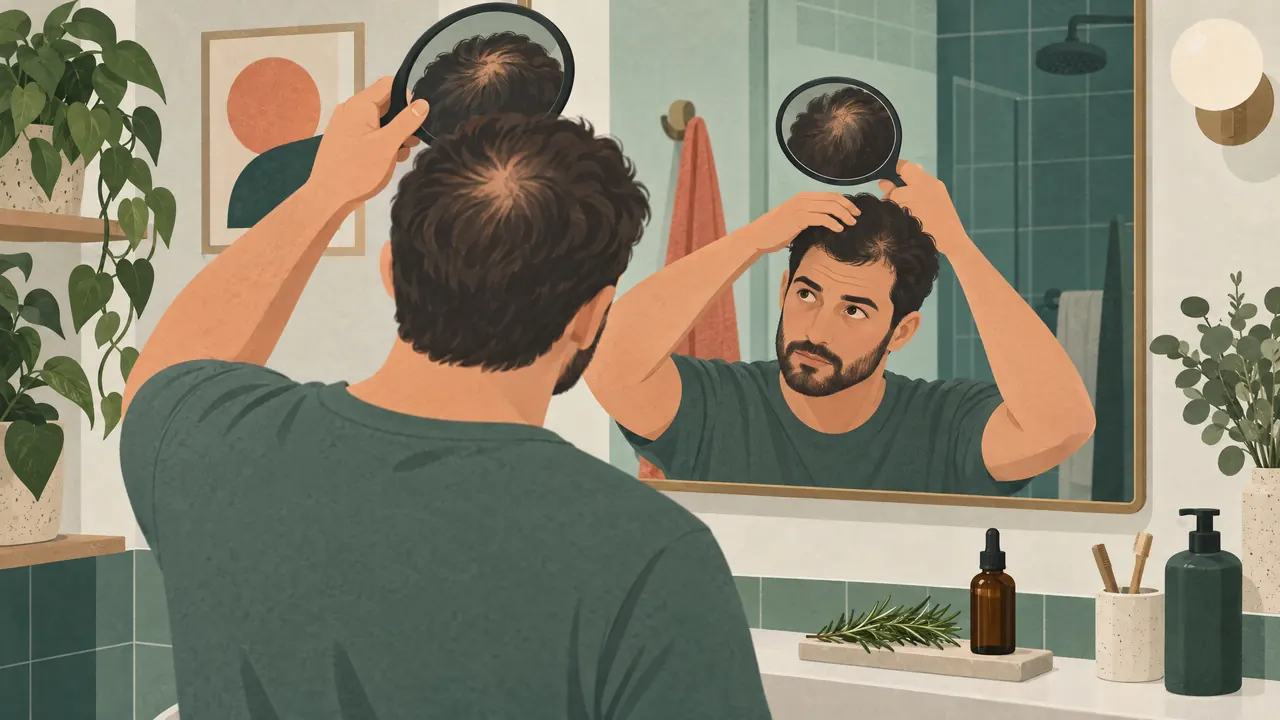
Take photos of your hairline and crown in the same light every month. Hair grows slowly, so treatments need four to six months before you can judge them, and photos are more honest than the mirror. See a doctor quickly for patchy loss, scalp pain or redness.
Male pattern hair loss, driven by genetics and the hormone DHT, is the most common cause. Stress, illness, nutrient deficiencies, thyroid problems and some medicines can also cause shedding.