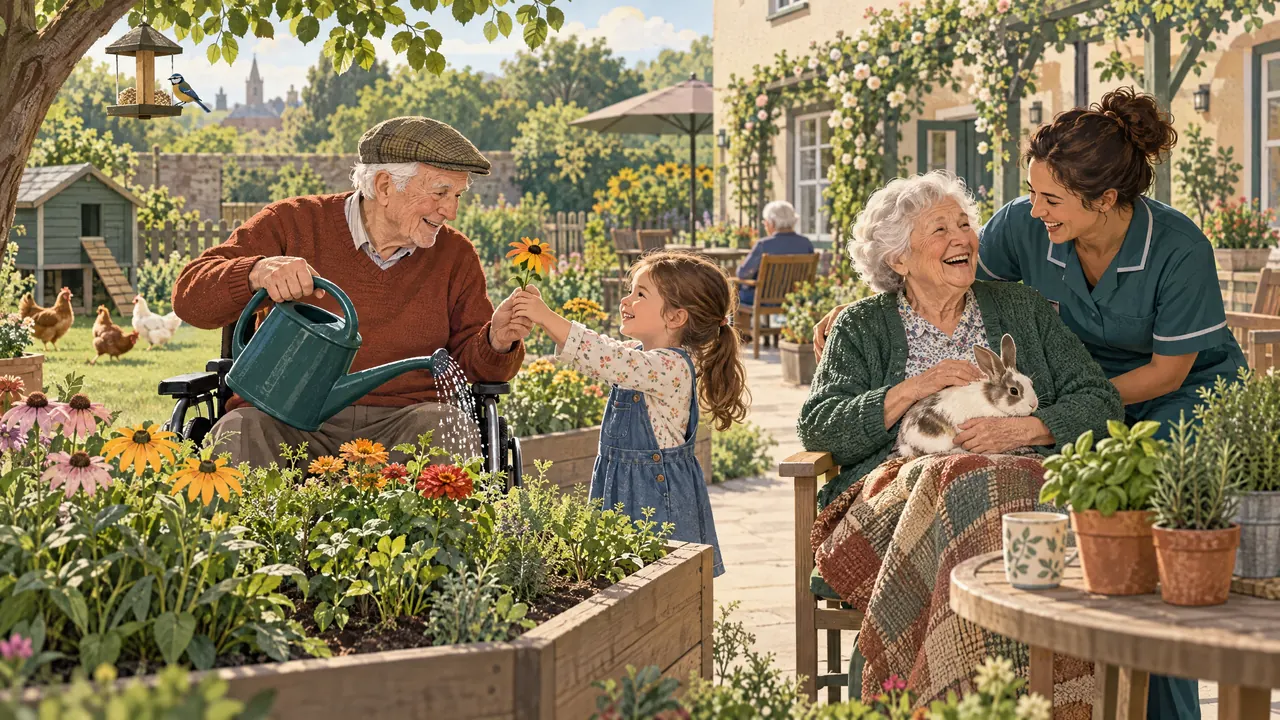
Say your mother needs care after a hospital stay, and you’re wondering how she’ll keep a sense of herself in a new place. At Shuksan Healthcare Center, our care philosophy follows the eden alternative: an approach that makes room for relationships, everyday interests and a sense of purpose alongside nursing and rehabilitation.
We’re a 52-bed skilled nursing facility in Bellingham offering short-term rehabilitation and long-term care. As you compare options, ask about more than the services available. Ask how your family member’s preferences will shape daily life. That question helps you see the person behind the care needs.
Where did the Eden Alternative begin?
Say your father can receive the nursing care he needs, but you’re worried he’ll spend his days feeling lonely or having little to do. That concern is central to the Eden Alternative.
According to Wikipedia’s “William H. Thomas (physician)” article, Thomas and his wife developed the approach in the early 1990s to address what they called the “three plagues” of boredom, helplessness and loneliness. They introduced pets, gardens and children into nursing homes. Thomas founded the Eden Alternative nonprofit in 1994.
The idea asks care communities to look beyond tasks and routines. People still need opportunities to make choices, form relationships and contribute something meaningful.
When you visit any facility, ask: “What could my father do here that would give him a reason to look forward to tomorrow?” Listen for an answer connected to his interests, rather than just a list of scheduled events.
Our vision keeps the person in view
Say your spouse has always enjoyed making people laugh, but now needs help with daily care. You might ask, “Will people here get to know who he is?”
Our vision statement expresses what we want our community to be:
“A family of friendly faces encouraging wellness, humor, happiness, and a sense of purpose. Where life with all its variety and joys will not be over for our elders when they cross our doorstep.”
That vision sits alongside the clinical side of care. Our licensed nurses and nursing assistants provide nursing care around the clock. You can learn more about our nursing services as you consider your family member’s needs.
Bring a short introduction to your loved one: what they enjoy, what matters to them and how they prefer to communicate. Include something beyond their medical history. A favorite interest can open a conversation that a diagnosis cannot.
What does the Eden Alternative look like here?
Say your mother has always kept houseplants and enjoys watching children play. You’re concerned that moving into a care setting will separate her from those familiar pleasures.
At Shuksan, animals, plants and visiting children are part of daily life. These are elements of our Eden Alternative philosophy, not substitutes for nursing care. They make space for contact with living things and connections beyond a medical routine.
We also offer activities seven days a week, including flower arranging, hymn singing, arts and crafts, bingo, guest entertainers, seasonal celebrations and community outings. A monthly activity calendar helps you see what’s planned.
But participation should begin with the person. Someone who loves flowers may welcome flower arranging; someone else may prefer a different activity.
Ask your family member what sounds appealing before suggesting an event. For the current schedule, call (360) 733-9161. At any facility, ask what options exist for someone who doesn’t enjoy group activities.
How do everyday choices and relationships matter?
Say your father has strong opinions about food and prefers a quiet conversation to a crowded gathering. You want those preferences to matter, even while he needs help.
Person-directed care means the person’s own priorities help guide decisions. It doesn’t mean every request can be met without considering health or safety. It means asking, listening and discussing options rather than assuming everyone wants the same thing.
At Shuksan, our cooks talk with residents each day about meal choices. Families are welcome and encouraged to be involved. Those conversations create opportunities to share preferences and learn what matters to each person.
Staff relationships matter, too. As you compare facilities, ask: “How will the people helping my father learn about his interests and preferences?” Then ask how that information is shared.
Write down a few preferences together. Include favorite foods, valued routines and activities your loved one would rather skip. Their answers should lead the conversation.
Can rehabilitation support a sense of purpose?
Say your spouse wants to return home after hospitalization, and the activity they miss most is throwing a ball for the dog. That detail can make therapy goals more personally meaningful.
Our in-house physical, occupational and speech therapists build personal therapy plans around what each person enjoys or needs to get back to. Examples from our therapists include throwing a ball for a dog, tending flowers in the courtyard and practicing putting.
A familiar goal gives you something concrete to discuss with the rehabilitation team. It connects treatment with daily life without promising a particular result.
Before a therapy conversation, ask your loved one: “What would you most like to do again?” Share that answer along with practical concerns about returning home.
Person-directed care starts with questions you can ask
Say you’re comparing facilities, and each one says it treats residents as individuals. You don’t have to rely on that statement alone. Ask for examples.
Useful questions include:
- How are residents involved in decisions about daily care?
- What happens when a resident declines an activity?
- How can families share concerns or changing preferences?
- How are personal goals discussed at a care plan conference?
A care plan conference is a meeting to discuss care needs and goals. Our social services include care plan conferences with families.
To discuss our philosophy and your family member’s needs, call (360) 733-9161 or visit 1530 James Street, Bellingham, WA 98225. Bring your questions, and your loved one’s priorities. For current bed availability or insurance questions, please call.
Frequently asked questions
What is the Eden Alternative in nursing homes?
The Eden Alternative is an approach developed by William H. Thomas and his wife to address boredom, helplessness and loneliness in nursing homes. It encourages opportunities for people to make choices, form relationships and contribute something meaningful alongside their care.
How does Shuksan Healthcare Center use the Eden Alternative?
At Shuksan, animals, plants and visiting children are part of daily life, alongside activities offered seven days a week. Cooks talk with residents daily about meal choices, and families are encouraged to be involved. These elements support personal preferences and relationships without replacing nursing care.
Can my loved one's interests be part of rehabilitation at Shuksan?
Shuksan’s in-house physical, occupational and speech therapists build personal therapy plans around what each person enjoys or needs to return to. Examples include throwing a ball for a dog, tending flowers in the courtyard and practicing putting. Families can share their loved one’s goals with the rehabilitation team.