In this post
Say you’re a 45-year-old man who’s feeling tired, recovering slowly from workouts, and wondering whether a supplement could help. A search for zinc benefits for men brings up promises about testosterone, fertility, and immunity—but those claims don’t all have the same evidence behind them.
Zinc is essential. Your body needs it for normal immune function, wound healing, and reproduction. But getting enough zinc and taking extra zinc are different things: correcting a deficiency can help, while adding more when you already have enough may offer little benefit.
We’ll start with what zinc actually does, how it relates to testosterone and sperm, and how much you need. Then we’ll look at practical food choices and the risks of high-dose supplements.
Zinc benefits for men: what does this mineral actually do?
Say you’ve started exercising more and want to support your recovery without buying a cabinet full of supplements. Zinc belongs on your nutritional checklist, but it shouldn’t be treated as a muscle-building shortcut.
Zinc helps enzymes carry out essential chemical reactions. Your body uses it to make DNA and proteins, support immune cells, and repair damaged tissue. It also contributes to your sense of taste.
At Shuksan Health Care, an independent health-information site covering men’s health, hormones, nutrition, and infections, this article explains where an essential nutrient ends and supplement marketing begins.
Immunity and wound healing
Say a small cut seems slow to heal, or you feel as though you catch every cold circulating at work. Low zinc intake is one possible contributor, but those symptoms don’t prove that you’re deficient.
The NIH Office of Dietary Supplements, in its 2022 zinc fact sheet, identifies impaired immune function and delayed wound healing as potential consequences of zinc deficiency. Getting enough supports normal function; taking extra isn’t a guarantee against illness.
Cold remedies need a separate discussion. Nault and colleagues’ 2024 Cochrane review found that zinc may shorten an existing cold, but the evidence was low certainty and results varied considerably. Zinc also increased nonserious side effects, including unpleasant taste and stomach upset.
That doesn’t establish a reason to take high-dose zinc every day. And intranasal zinc products should be avoided: the FDA’s 2009 safety warning linked certain zinc-containing nasal products to loss of smell.
For everyday immune support, start by checking whether your meals contain zinc-rich foods. Persistent slow wound healing or recurrent infections deserves medical evaluation rather than an automatic supplement purchase. Our infection prevention guide covers measures that address infection risk more directly.
Does zinc raise testosterone or improve sperm health?
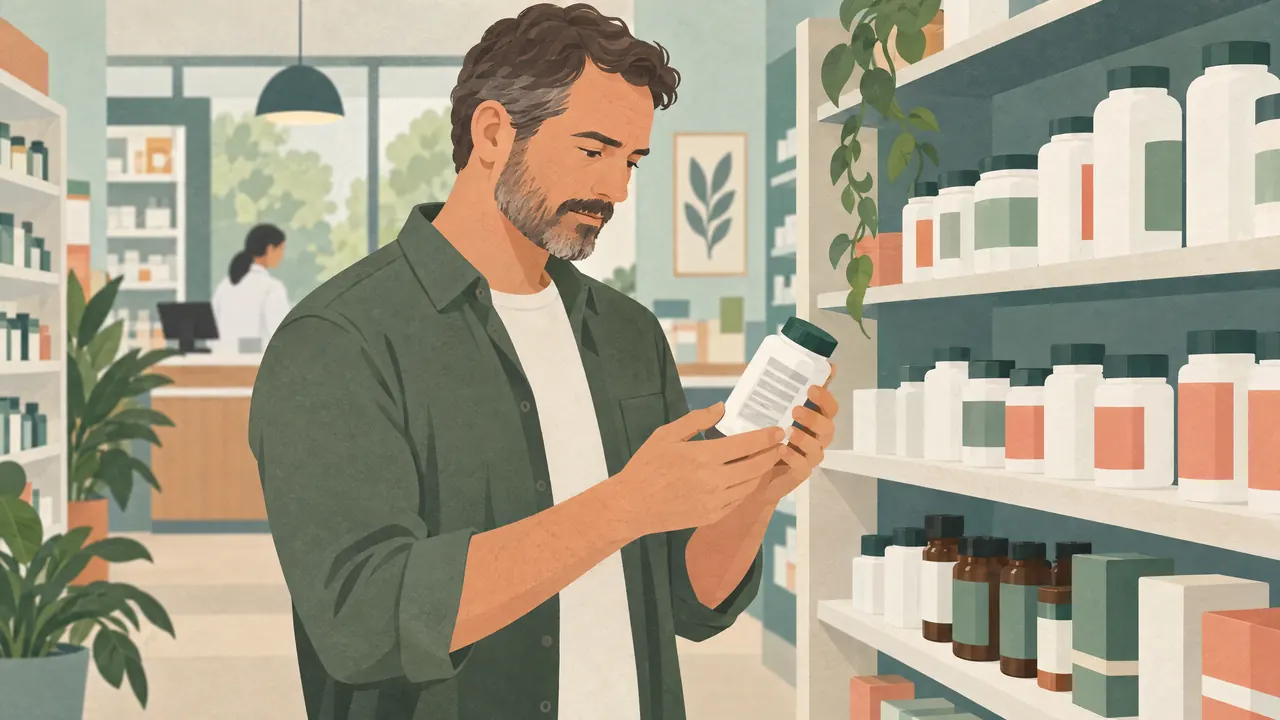
Say you’re noticing lower sex drive and see a “testosterone support” supplement with zinc prominently displayed on the label. The useful question is whether you lack zinc—not whether a larger dose can push normal hormone levels higher.
Zinc supports normal reproductive function. However, the strongest argument for supplementation is correcting inadequate intake or a confirmed deficiency, not boosting testosterone in every man.
Testosterone: deficiency matters more than extra dosing
Say you’ve been eating a very restricted diet for months. In that situation, inadequate zinc could contribute to a health problem, including altered hormone function.
Prasad and colleagues, in a 1996 study published in Nutrition, reported that restricting zinc intake reduced testosterone in a small group of young men, while supplementation increased testosterone in older men with marginal zinc deficiency. The study was small and doesn’t establish that zinc raises testosterone in men who already have adequate zinc status.
That distinction matters. A nutrient can be necessary for hormone production without acting like a hormone treatment.
If low libido, fewer morning erections, or unexplained fatigue persists, discuss the symptoms with a clinician. Evaluation may include an early-morning testosterone blood test and repeat testing when appropriate. Sleep problems, medications, and other illnesses can produce overlapping symptoms.
Our guide to signs of low testosterone can help you prepare for that conversation. It can’t replace testing.
Sperm health: necessary doesn’t mean proven fertility treatment
Say you and your partner are trying to conceive, and you’re considering zinc because it’s present in semen. Zinc does contribute to normal sperm biology, but that alone doesn’t prove supplements improve pregnancy outcomes.
Schisterman and colleagues’ 2020 randomized trial in JAMA included 2,370 men undergoing infertility treatment. A supplement containing 30 mg of elemental zinc and 5 mg of folic acid daily did not significantly improve semen quality or live birth rates compared with placebo.
Because the trial tested a combination, it doesn’t answer every question about zinc alone. Still, it argues against assuming that a zinc-containing fertility supplement will help.
If conception isn’t happening, a semen analysis—often shortened to SA, meaning a laboratory assessment of semen—is more useful than guessing which nutrient might be missing. A fertility clinician can advise on evaluation based on your partner’s age, how long you’ve been trying, and your medical histories.
How much zinc do men need, and who is at risk of deficiency?
Say your multivitamin contains zinc, your immune supplement contains more, and you eat a reasonably varied diet. Before adding another product, count what you’re already getting.
The NIH Office of Dietary Supplements’ 2022 fact sheet gives these amounts for adult men:
| Reference amount | Daily zinc | What it means |
|---|---|---|
| Recommended dietary allowance, or RDA | 11 mg | The intake that meets the needs of nearly all healthy adult men |
| Tolerable upper intake level, or UL | 40 mg | The maximum usual daily intake unlikely to cause harm |
The UL includes zinc from food, drinks, and supplements combined. It isn’t a target, and clinician-supervised treatment may follow different dosing rules.
Read the amount of elemental zinc on the Supplement Facts panel. That’s the zinc dose to count, rather than the total weight of a compound such as zinc gluconate.
Some men need a closer look at their intake:
- Vegetarians and vegans: Beans, seeds, and whole grains contain zinc, but phytates in these foods reduce absorption. Fermenting, soaking, and using a varied diet can help improve zinc availability.
- People who drink heavily: Alcohol use disorder can reduce food intake and interfere with zinc absorption and retention.
- People with intestinal disorders or previous bariatric surgery: Poor absorption can make adequate dietary intake harder to translate into adequate zinc status.
A food diary can identify obvious gaps. But blood zinc testing has limitations, and a result needs interpretation alongside your diet, symptoms, and medical history. If you have ongoing diarrhea, unexplained weight loss, or a highly restricted diet, ask a clinician whether testing or dietitian support would help.
Food-first zinc intake helps you meet your needs without high-dose risks
Say you’d rather adjust lunch than add another pill. That’s a reasonable starting point: several ordinary foods can supply meaningful amounts of zinc.
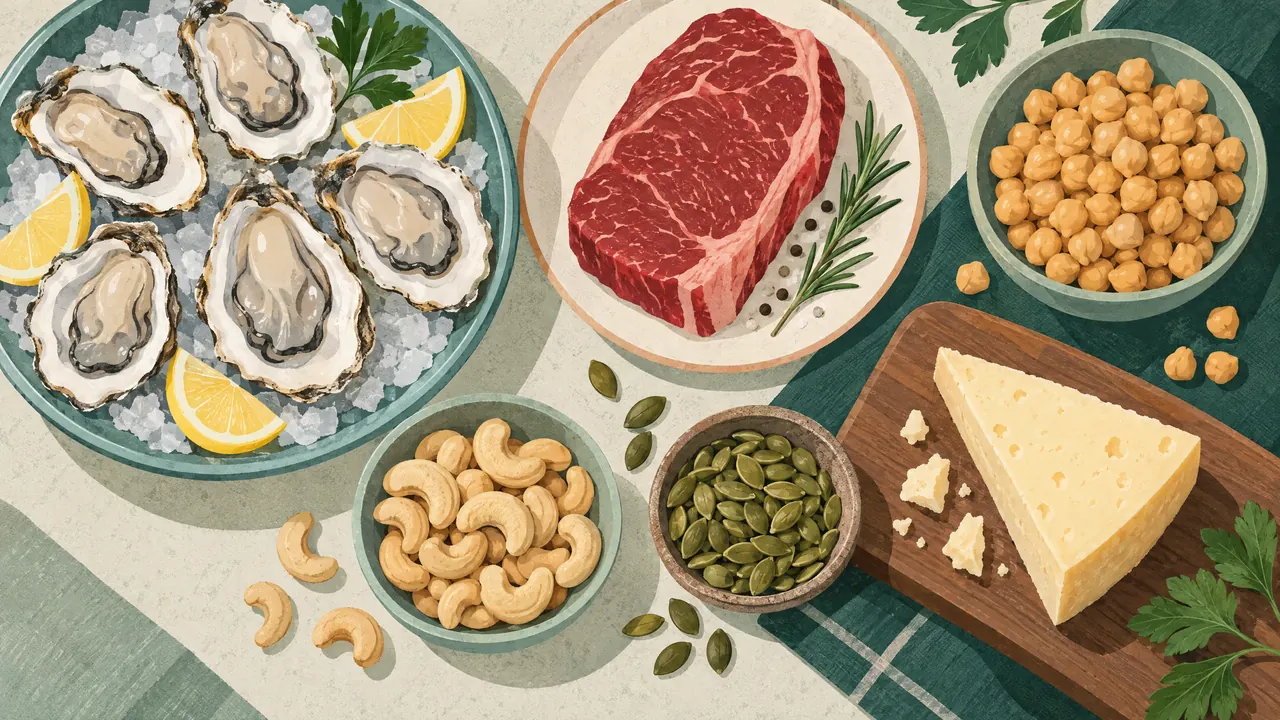
The NIH Office of Dietary Supplements’ 2022 food table reports approximately:
| Food and serving | Zinc |
|---|---|
| Eastern oysters, cooked, 3 ounces | 28.2 mg |
| Beef bottom sirloin, roasted, 3 ounces | 3.8 mg |
| Pumpkin seeds, roasted, 1 ounce | 2.2 mg |
Amounts vary with the food and preparation. Oysters are unusually concentrated, while beef and pumpkin seeds fit more easily into routine meals. Cook oysters thoroughly to reduce foodborne illness risk.
You don’t need oysters every day. Try pumpkin seeds over oatmeal, beef with vegetables, or a combination of beans, dairy foods, and whole grains. Our article on pumpkin seeds and men’s health explains how they fit into a broader eating pattern.
Supplements require more caution. The NIH Office of Dietary Supplements’ 2022 fact sheet warns that taking 50 mg of zinc or more daily for weeks can interfere with copper absorption. Copper deficiency can cause anemia and neurological problems; excess zinc can also cause nausea and vomiting.
But the answer isn’t to add copper automatically. It’s to review whether you need that zinc dose at all.
If you’re considering a supplement, compare its dose with your multivitamin and usual food intake. Long-term high-dose use belongs under medical supervision, especially if you develop numbness, weakness, balance problems, or unexplained fatigue.
How to choose a zinc supplement when you actually need one
Say your dietitian identifies a gap in your diet, and you’re comparing bottles labeled zinc citrate, gluconate, and oxide. The names sound technical, but the most useful details are the dose, the reason for taking it, and the product’s quality controls.
There’s no established “best zinc for men” that reliably improves testosterone, fertility, or workout recovery. A supplement should address a nutritional need—not a collection of promises on the front label.
The NIH Office of Dietary Supplements’ 2022 fact sheet describes research in young adults in which zinc absorption from citrate and gluconate was similar, while absorption from oxide was lower. That finding doesn’t establish that one form produces better long-term health outcomes.
A practical approach is to compare products using these questions:
- Does the amount match your actual dietary gap? A product that supplies much more than you need isn’t better value.
- Is zinc the only ingredient you need? Combination formulas make it harder to identify what’s helping or causing side effects.
- Has the product undergone independent quality testing? Third-party verification can help check identity and manufacturing quality, although it doesn’t prove a health benefit.
- Can you take it consistently without stomach discomfort? If the label allows it, taking zinc with a meal may be easier on your stomach.
You don’t need a premium “male performance” formula to correct inadequate zinc intake. And if a clinician recommends treatment for a deficiency, ask about the planned duration and how they’ll assess your response.
Make a plan for reassessment
Say you start a supplement during a period of poor appetite, then continue taking it long after your eating habits recover. The original reason for using it may no longer apply.
There’s no universal supplement schedule for every man. Before starting, write down why you’re taking it and when you’ll review that decision. For clinician-directed treatment, follow the agreed follow-up plan rather than stopping or extending it on your own.
Can you take zinc with antibiotics or other medicines?
Say you’re prescribed an antibiotic while already taking a zinc supplement with breakfast. Even a routine supplement can interfere with a prescription if you take them together.
Zinc can bind to certain medicines in the digestive tract, reducing their absorption. The interaction is especially relevant to quinolone and tetracycline antibiotics, including ciprofloxacin and doxycycline.
The NIH Office of Dietary Supplements’ 2022 fact sheet recommends taking these antibiotics at least 2 hours before or 4–6 hours after zinc supplements. Your prescription instructions still matter: a pharmacist can help arrange the timing around your specific medicine and meals.
That’s a reason to separate doses, not skip treatment. Our guide to antibiotic side effects explains other problems worth discussing during a course of treatment.
Zinc also interacts with penicillamine, a medicine used for conditions including Wilson disease. The same NIH fact sheet advises separating zinc and penicillamine by at least 1 hour. If you’re being treated for Wilson disease, follow your specialist’s instructions; zinc itself may be part of a carefully managed treatment plan.
Before starting a new prescription, give your pharmacist a complete supplement list. Include multivitamins and cold lozenges, even if you use them only occasionally. A photo of each label is often more useful than saying you take “an immune supplement.”
When symptoms need an evaluation instead of more zinc
Say you’ve improved your meals and taken a supplement, but you’re still exhausted and noticing changes in taste. Increasing the dose may feel like the next step. It usually isn’t the most informative one.
Symptoms associated with zinc deficiency overlap with many other conditions. Fatigue can reflect anemia, disrupted sleep, thyroid disease, or medication effects. Changes in taste can follow an infection or arise from dental problems. Hair loss has several possible causes, too.
Treat the pattern, not just the symptom. Make a short note of:
- When the problem started and whether it’s getting worse.
- Changes in appetite, weight, bowel habits, or food intake.
- All medicines and supplements, including how long you’ve taken them.
- Any recent illness, surgery, or major dietary restriction.
Bring that information to your appointment. It helps a clinician decide whether nutritional assessment, blood work, or another evaluation is appropriate. A zinc measurement alone can’t explain every symptom, and inflammation or illness can affect its interpretation.
Persistent symptoms deserve attention even if your supplement label looks reassuring. Arrange prompt medical assessment for new numbness, trouble walking, or substantial weakness, especially after prolonged supplement use. Those problems shouldn’t be managed by adding another mineral at home.
If you drink heavily, be open about the amount and frequency. That information helps identify nutritional gaps and other health risks. If you may be physically dependent on alcohol, get medical advice before abruptly stopping, because withdrawal can be dangerous.
Zinc supports men’s health, but extra zinc isn’t a hormone treatment
Say you finish reading and wonder whether zinc belongs in your daily routine. The answer depends on what’s missing—not on how strongly a bottle advertises benefits for men.
Adequate zinc supports normal immune and reproductive function. Correcting a deficiency is worthwhile. But the evidence doesn’t justify treating extra zinc as a dependable testosterone booster or fertility treatment for men whose intake is already adequate.
Your next step can be modest: review a few typical days of meals, check any supplement labels, and identify whether there’s a clear gap. If there is, discuss food changes or an appropriate supplement with a clinician or dietitian.
Keep the goal specific. Better nutritional intake is a reasonable goal; fixing persistent fatigue, low libido, or infertility without an evaluation isn’t. Zinc is one part of your health—not a substitute for finding out what’s wrong.
Frequently asked questions
Does zinc increase testosterone in men?
Correcting zinc deficiency may help restore normal testosterone levels. A small study found changes in testosterone with zinc restriction and supplementation, but it does not show that extra zinc boosts testosterone in men with adequate zinc status.
How much zinc should a man take daily?
Adult men need 11 mg of zinc daily, which can come from food and supplements combined. The usual upper intake limit is 40 mg daily from all sources; higher treatment doses require medical supervision.
Does zinc improve sperm health and male fertility?
Zinc is needed for normal sperm biology, but supplements are not a proven fertility treatment. A trial involving 2,370 men found that daily zinc plus folic acid did not significantly improve semen quality or live birth rates compared with placebo.
What are the risks of taking too much zinc?
Excess zinc can cause nausea and vomiting. Taking 50 mg or more daily for weeks can interfere with copper absorption, potentially causing anemia and neurological problems.