In this post
Say you’re looking for a snack that does more than keep you busy between meals. You’ve heard about pumpkin seeds benefits for men, especially for prostate health, testosterone, and sleep. But how much of that reputation comes from solid nutrition, and how much stretches the evidence?
Pumpkin seeds provide magnesium, zinc, protein, and unsaturated fats in a convenient package. They can help you meet nutrient needs, but eating them hasn’t been shown to reliably raise testosterone or treat an enlarged prostate.
The useful approach is to separate the benefits of the food from the claims made about supplements. Here’s what a realistic serving offers, what the research suggests, and how to make pumpkin seeds part of your diet without expecting them to act like medicine.
Pumpkin seeds benefits for men start with their nutrients
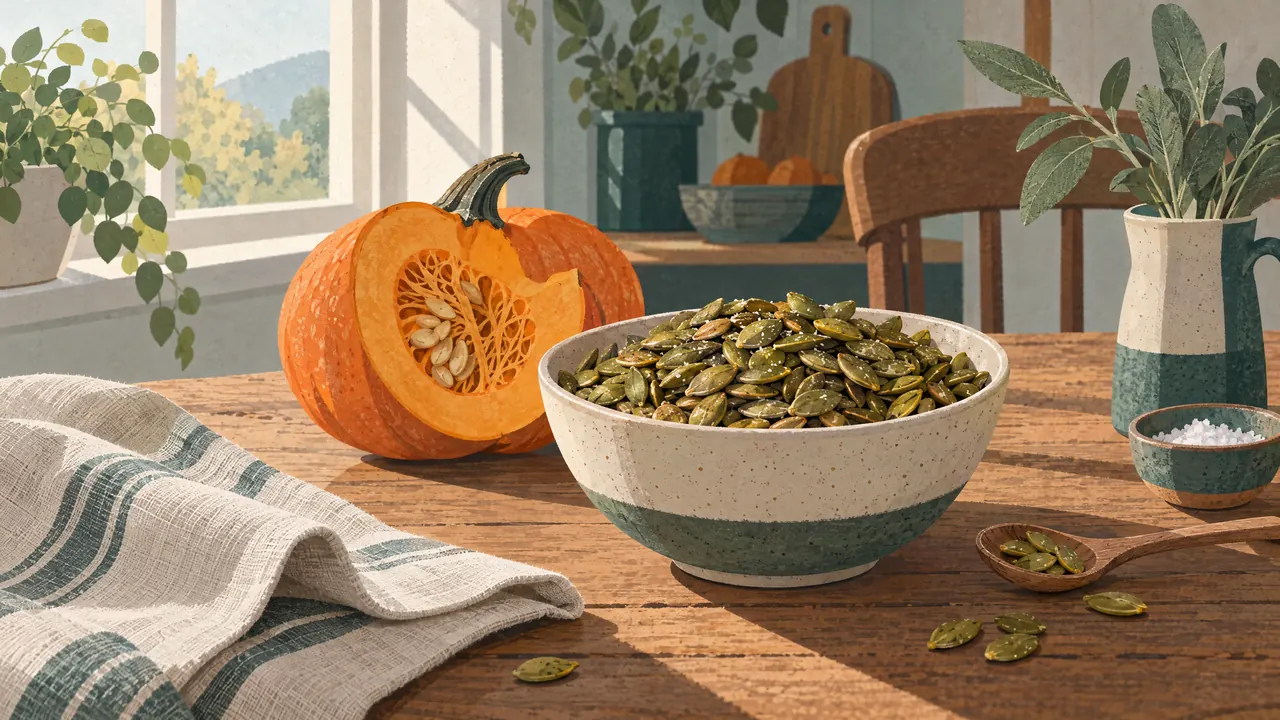
Say you grab a handful of green pumpkin seeds while packing lunch. That small serving can contribute meaningful amounts of minerals, although the portion and preparation matter.
The green kernels commonly sold as pepitas have had their outer shells removed. Whole, white-shelled pumpkin seeds are a different eating experience, and a scoop of those won’t contain the same amount of edible kernels. For a consistent comparison, use 1 ounce of roasted kernels, approximately a small handful.
The NIH Office of Dietary Supplements lists these amounts in its magnesium and zinc fact sheets, updated in 2022:
| Nutrient | Amount in 1 ounce of roasted pumpkin seeds | Recommended daily amount for adult men |
|---|---|---|
| Magnesium | 156 milligrams | 400 milligrams at ages 19–30; 420 milligrams at ages 31 and older |
| Zinc | 2.2 milligrams | 11 milligrams |
That serving provides about 37%–39% of a man’s daily magnesium requirement and 20% of his zinc requirement. These percentages compare the serving with the recommended dietary allowance, or RDA—the daily intake intended to meet the needs of most healthy people.
Those are worthwhile contributions. Still, pumpkin seeds shouldn’t be your only source of either mineral.
Magnesium supports normal muscle and nerve function, blood glucose regulation, and blood pressure regulation. Zinc supports immune function, DNA synthesis, and reproductive biology. Pumpkin seeds also supply plant protein and predominantly unsaturated fats, making them a useful alternative to snacks built around refined starch or saturated fat.
At Shuksan Health Care, an independent health-information site covering men’s health, hormones, nutrition, and infections, we use this distinction throughout our nutrition coverage: a food can support normal function without treating a medical condition.
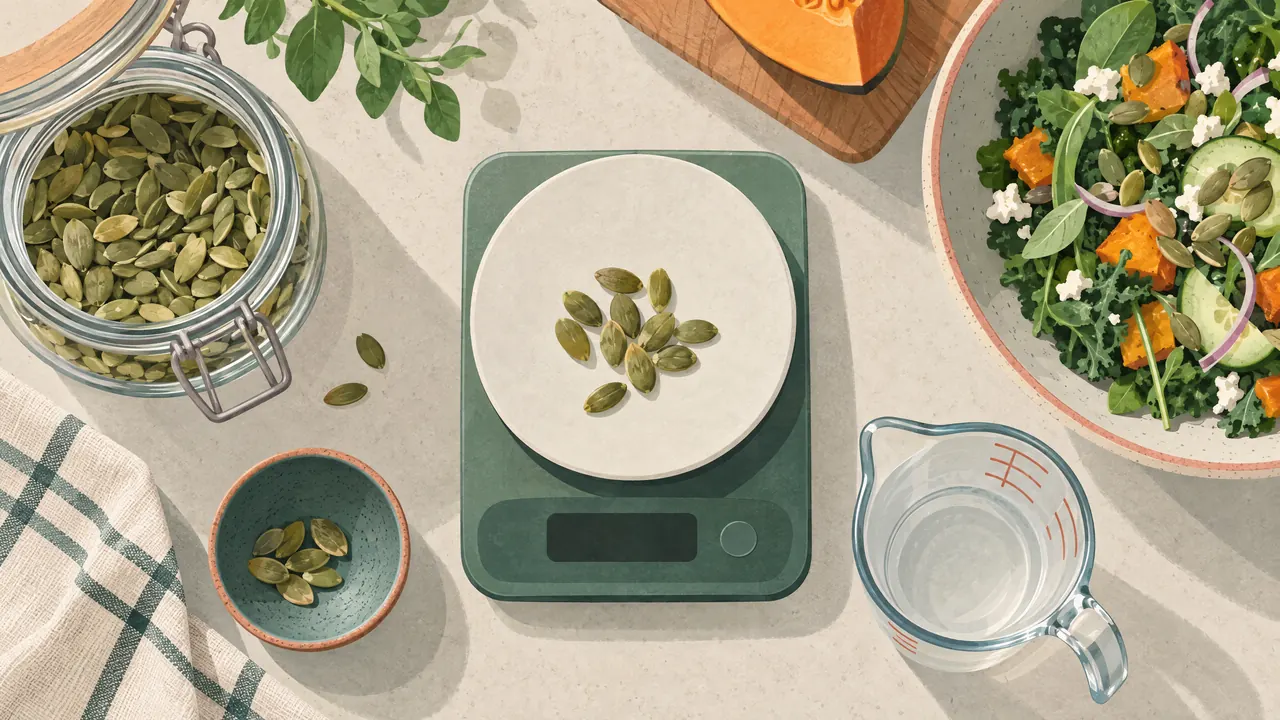
A practical starting point: measure an ounce once so you recognize the portion. Choose unsalted kernels if you’re limiting sodium, and use them to replace another snack rather than automatically adding them to everything you already eat.
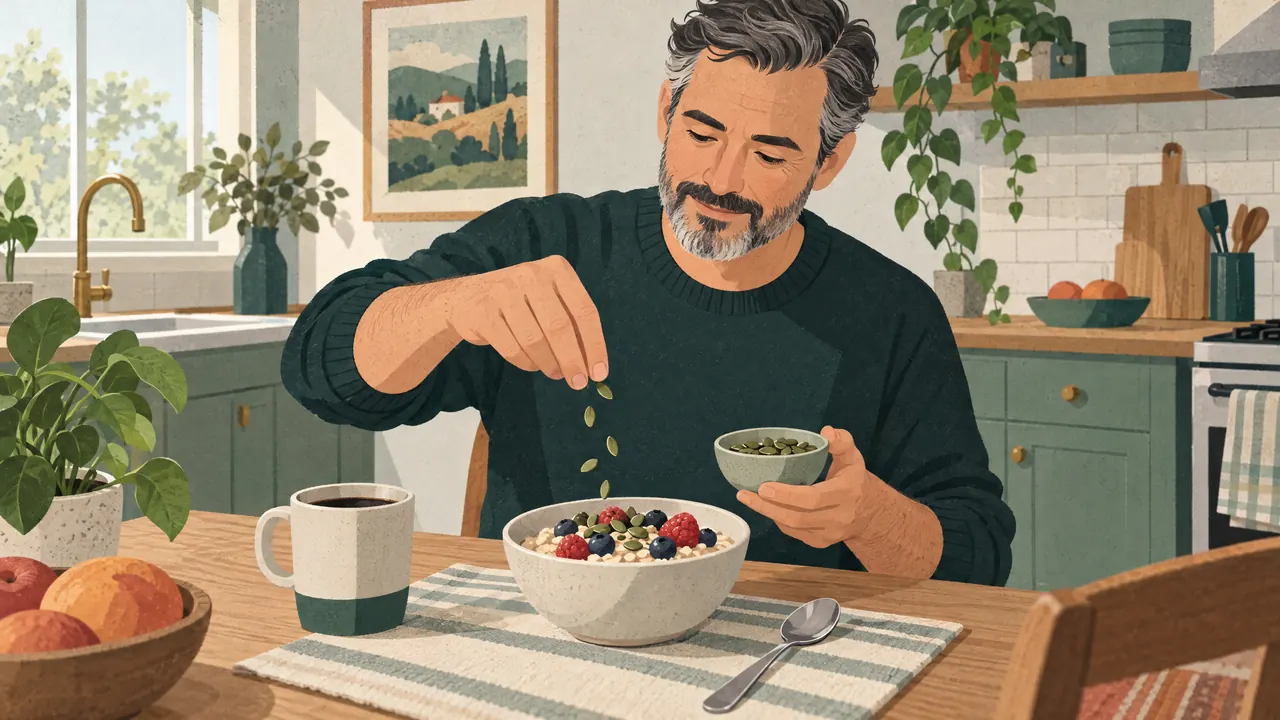
Do pumpkin seeds increase testosterone?
Say a man with low energy starts eating pumpkin seeds because he’s heard zinc “boosts testosterone.” The missing question is whether he actually has a zinc deficiency—or low testosterone at all.
Zinc is necessary for normal reproductive function. However, supplying a needed nutrient and pushing hormone levels above normal are different outcomes.
In a small human study, Prasad and colleagues (1996), published in Nutrition, found that dietary zinc restriction lowered testosterone in young men, while zinc supplementation increased testosterone in marginally zinc-deficient older men. The study supports correcting inadequate zinc intake. It doesn’t establish pumpkin seeds as a testosterone treatment for men whose zinc intake is already sufficient.
That distinction matters. There’s no good clinical evidence that an ordinary serving of pumpkin seeds reliably increases testosterone in well-nourished men.
An ounce provides 2.2 milligrams of zinc, so it can help close a dietary gap. Beans, dairy foods, meat, and seafood can contribute too. Our guide to zinc’s benefits for men explains why food sources and high-dose supplements deserve different expectations.
More zinc isn’t always better. The NIH Office of Dietary Supplements (2022) sets the adult tolerable upper intake level at 40 milligrams daily, counting food and supplements. Excessive supplemental zinc can interfere with copper absorption and cause other health problems.
So you don’t need a zinc pill just because you’re adding pepitas to breakfast.
If fatigue comes with persistent low libido, fewer spontaneous erections, or other possible signs of low testosterone, arrange a medical evaluation. These symptoms can also reflect poor sleep, medication effects, depression, or other conditions. Clinicians generally evaluate suspected testosterone deficiency using symptoms and morning blood tests, rather than a dietary guess.
For everyday eating, pumpkin seeds fit into a broader pattern of foods that support normal hormone function. They’re a supporting ingredient, not a hormone prescription.
What does the research say about pumpkin seeds and prostate health?
Say a 58-year-old man starts waking at night to urinate and wonders whether pumpkin seeds could help. It’s a reasonable question, but urinary symptoms need more attention than a change in snacks.
Benign prostatic hyperplasia, or BPH, means noncancerous enlargement of the prostate. It can contribute to a weak stream, difficulty starting urination, and a feeling that the bladder hasn’t emptied. Similar symptoms can have other causes, including infection or bladder problems.
Pumpkin seeds contain phytosterols—plant compounds with a structure similar to cholesterol. Researchers have investigated pumpkin seed preparations for urinary symptoms, but a plausible mechanism doesn’t prove that the food shrinks the prostate.
One substantial trial offers a cautiously encouraging finding. Vahlensieck and colleagues (2015), in Urologia Internationalis, studied 1,431 men with BPH-related lower urinary tract symptoms over one year. The trial compared pumpkin seeds, pumpkin seed extract, and placebo. The whole-seed group showed better symptom response than placebo, while the extract group did not demonstrate the same clear advantage.
There are reasons to temper the result:
- Symptoms were the main focus. Symptom improvement doesn’t establish that the prostate became smaller.
- The whole-seed treatment was recognizable. Knowing what you’re taking can influence reports of symptom relief.
- Preparations aren’t interchangeable. Whole seeds, oil, and concentrated extracts can differ substantially.
- This isn’t cancer-prevention evidence. The trial doesn’t show that pumpkin seeds prevent or treat prostate cancer.
You can eat pumpkin seeds while receiving appropriate care, but don’t use them as a reason to delay evaluation. A clinician may check your symptoms, medications, urine, and prostate-related risks before discussing treatment.
Seek urgent care if you can’t urinate. Blood in the urine, fever with urinary symptoms, or significant pain also warrants prompt medical attention.
For meal planning, our guide to foods to eat for prostate health places individual ingredients within a broader diet. That’s a more useful framework than treating one seed as a prostate remedy.
An ounce of pumpkin seeds is a useful snack, not a treatment
Say you like the nutritional benefits but find yourself eating straight from a large bag. The practical challenge is portion control, especially because seeds are energy-dense.
Start with a measured ounce. You can stir it into oatmeal, sprinkle it over a salad, or add it to plain yogurt. For a savory snack, roast plain kernels until lightly golden, following the package’s preparation instructions, then season with paprika or garlic powder instead of relying heavily on salt. Watch closely: small seeds burn quickly.
Their unsaturated fats make them a sensible replacement for some snacks higher in saturated fat. But adding seeds without replacing anything else can increase your overall energy intake.
Sleep claims need similar restraint. Pumpkin seeds contain tryptophan, an amino acid involved in making serotonin and melatonin, but that doesn’t establish that a handful treats insomnia. Enjoying them with dinner is reasonable; persistent sleep problems deserve attention to sleep habits and possible underlying causes.
The strongest reason to eat pumpkin seeds is straightforward: they’re a convenient source of nutrients many diets could use more of. Keep the portion realistic, choose a preparation you enjoy, and judge hormone or urinary symptoms separately from your snack choices.
How pumpkin seeds can support heart health
Say your usual afternoon snack is a pastry, and you’re considering a portion of pumpkin seeds instead. The potential heart benefit comes partly from what you replace—not just from what the seeds contain.
Pumpkin seeds provide unsaturated fats. Replacing some saturated fat with unsaturated fat can help improve your blood cholesterol profile, especially when the change becomes a regular eating habit.
Hooper and colleagues’ 2020 Cochrane review found that reducing saturated fat over the long term reduced combined cardiovascular events. That finding supports changing your overall fat intake; it doesn’t prove that pumpkin seeds alone prevent heart attacks.
Make the substitution count. You might replace part of the cheese or creamy dressing on a salad with pepitas, or choose seeds instead of a buttery baked snack. Adding them to an unchanged diet is a different decision, particularly if you’re managing your weight.
What about phytosterols and cholesterol?
Say you notice “plant sterols” on a cholesterol-lowering product and wonder whether pumpkin seeds offer the same effect. They contain these compounds, but the amount and preparation matter.
Phytosterols can reduce cholesterol absorption in the intestine. The European Atherosclerosis Society consensus statement by Gylling and colleagues (2014), published in Atherosclerosis, describes LDL-cholesterol reductions from foods enriched with plant sterols or stanols. LDL is the cholesterol commonly called “bad” cholesterol.
Those enriched products aren’t equivalent to an ordinary serving of seeds. You shouldn’t assume that a handful of pepitas delivers a therapeutic dose or produces the same cholesterol reduction.
The practical approach is less complicated: use seeds as one ingredient in a diet that includes beans, vegetables, whole grains, and other unsaturated-fat sources. If your LDL is elevated, follow your clinician’s treatment plan and use repeat blood tests—not how healthy a snack sounds—to judge progress.
Can pumpkin seeds help you sleep better?
Say you feel tired at bedtime but spend an hour scrolling before you fall asleep. A snack containing magnesium and tryptophan may sound appealing, but it won’t remove the stimulation or delayed bedtime that keeps you awake.
Tryptophan is used to make serotonin, which is involved in producing melatonin. That biological pathway explains the interest in tryptophan-containing foods. It doesn’t establish a predictable sleep effect from pumpkin seeds.
Magnesium deserves similar caution. Mah and Pitre’s 2021 systematic review in BMC Complementary Medicine and Therapies found limited, low-quality evidence that magnesium supplements might help some older adults with insomnia. The authors emphasized uncertainty in the evidence. Their review evaluated supplements, not pumpkin seeds.
So a magnesium-rich food can help meet your nutritional needs without functioning as a sleep aid. Taking extra magnesium when you already consume enough isn’t a proven shortcut to better rest.
If hunger regularly interrupts your evening, a modest snack that includes pepitas is reasonable. But there’s no established best bedtime dose, and a large meal close to bed may be uncomfortable if you have reflux.
Try matching your response to the actual problem:
- Bedtime keeps drifting later: choose a consistent wake-up time and give yourself a screen-free wind-down period.
- Caffeine lingers into the evening: move your last caffeinated drink earlier and see whether sleep improves.
- You snore loudly or wake gasping: ask a clinician about sleep apnea rather than relying on food or supplements.
- Insomnia persists: discuss cognitive behavioral therapy for insomnia, or CBT-I, a structured treatment that addresses sleep habits and thought patterns.
Our guide to the best time to take magnesium explains why supplement timing is a separate question from getting magnesium through food.
Who should be cautious about eating pumpkin seeds?
Say you have chronic kidney disease and have been given specific food limits. A snack can be nutritious for most people while still needing adjustment for your situation.
Pumpkin seeds contain phosphorus and potassium as well as magnesium. Whether you need to limit these minerals depends on your kidney function, blood test results, medications, and treatment. There isn’t one suitable “kidney diet” for everyone.
If you have prescribed mineral restrictions, ask your renal dietitian how seeds fit into your plan. Bring the package label and your usual serving size. That makes the discussion more useful than asking whether all seeds are good or bad.
Don’t assume a magnesium supplement is an equivalent replacement. The NIH Office of Dietary Supplements’ magnesium fact sheet (2022) explains that impaired kidney function increases the risk of magnesium toxicity because the kidneys cannot remove excess magnesium effectively.
Other situations call for smaller adjustments:
- Digestive discomfort: start with a smaller portion and chew thoroughly. A sudden increase in seeds or other fiber-containing foods can cause bloating.
- Difficulty chewing or swallowing: avoid hard whole seeds. Finely ground kernels mixed into a suitable food may be easier, but a diagnosed swallowing disorder needs individualized advice.
- A known seed allergy: avoid pumpkin seeds if you’ve reacted to them, and check labels for cross-contact with other allergens.
- A sodium restriction: compare labels; seasoning blends and salted varieties can add sodium you didn’t expect.
Hives, lip or tongue swelling, wheezing, or breathing difficulty after eating can signal an allergic reaction. Breathing difficulty or throat swelling requires emergency care.
For everyday storage, keep seeds tightly sealed, away from heat and light, and follow package directions. Refrigeration can help preserve freshness after opening. Discard seeds that smell rancid rather than trying to hide the flavor with seasoning.
Pumpkin seeds help most when they improve your overall diet
Say you’re ready to add pepitas to your weekly shopping list but don’t want another complicated health routine. You don’t need one. Choose a meal or snack they can improve, then make that change consistently.
For example, use a small amount as a crunchy topping on bean soup, mix them into a homemade trail mix without making dried fruit the main ingredient, or blend them into a sauce with herbs and lemon. If you prefer roasted seeds, buy plain kernels so you can control the seasoning.
Keep expectations specific. Pumpkin seeds can contribute useful minerals, plant protein, and unsaturated fats. They’re not an established treatment for low testosterone, insomnia, or prostate disease.
A practical check is to ask: What are these seeds replacing, and what problem am I expecting them to solve? Replacing a less nutritious snack is a reasonable goal. Trying to fix persistent urinary symptoms or unexplained fatigue with food alone isn’t.
Enjoy pumpkin seeds because they taste good and help you eat well. Let medical evaluation—not a snack’s reputation—guide decisions about symptoms.
Frequently asked questions
What are the benefits of pumpkin seeds for men?
Pumpkin seeds provide magnesium, zinc, plant protein, and predominantly unsaturated fats. One ounce of roasted kernels supplies about 37%–39% of an adult man’s daily magnesium requirement and 20% of his zinc requirement.
Do pumpkin seeds increase testosterone?
There is no good clinical evidence that ordinary servings reliably raise testosterone in well-nourished men. Their zinc can help meet nutrient needs, but correcting zinc deficiency is different from boosting normal hormone levels.
Are pumpkin seeds good for prostate health?
A year-long trial found improved urinary symptom response in men with benign prostatic hyperplasia who took whole pumpkin seeds compared with placebo. This does not prove that pumpkin seeds shrink the prostate or prevent prostate cancer, and urinary symptoms need medical evaluation.
How many pumpkin seeds should a man eat daily?
A practical starting portion is one ounce of roasted kernels, roughly a small handful. Choose unsalted seeds if limiting sodium, and replace another snack rather than adding extra calories to your usual diet.