In this post
Say you’re a 48-year-old man adding beet juice to your grocery cart because you’ve heard it helps blood pressure, workouts, and erections. Which claims deserve your attention? The strongest evidence for beetroot benefits for men involves dietary nitrate, a compound that can support blood vessel function and sometimes improve exercise performance.
That doesn’t make beetroot a testosterone booster or a treatment for erectile dysfunction. It’s a nutritious food with some useful physiological effects, and concentrated juice has trade-offs that whole beets don’t always share.
Here’s how the evidence translates into everyday choices, including realistic expectations, exercise timing, and precautions if you’ve had kidney stones.
Beetroot benefits for men start with nitrate—not testosterone
Say you roast beets for dinner while a friend drinks beet juice before cycling. Both provide dietary nitrate, but the amounts can differ considerably. That helps explain why eating beets and taking a concentrated sports supplement aren’t interchangeable.
At Shuksan Health Care, an independent health-information site covering men’s health, hormones, nutrition, and infections, we examine beetroot as a food that may support cardiovascular and exercise health—not as a hormone treatment.
How nitrate becomes nitric oxide
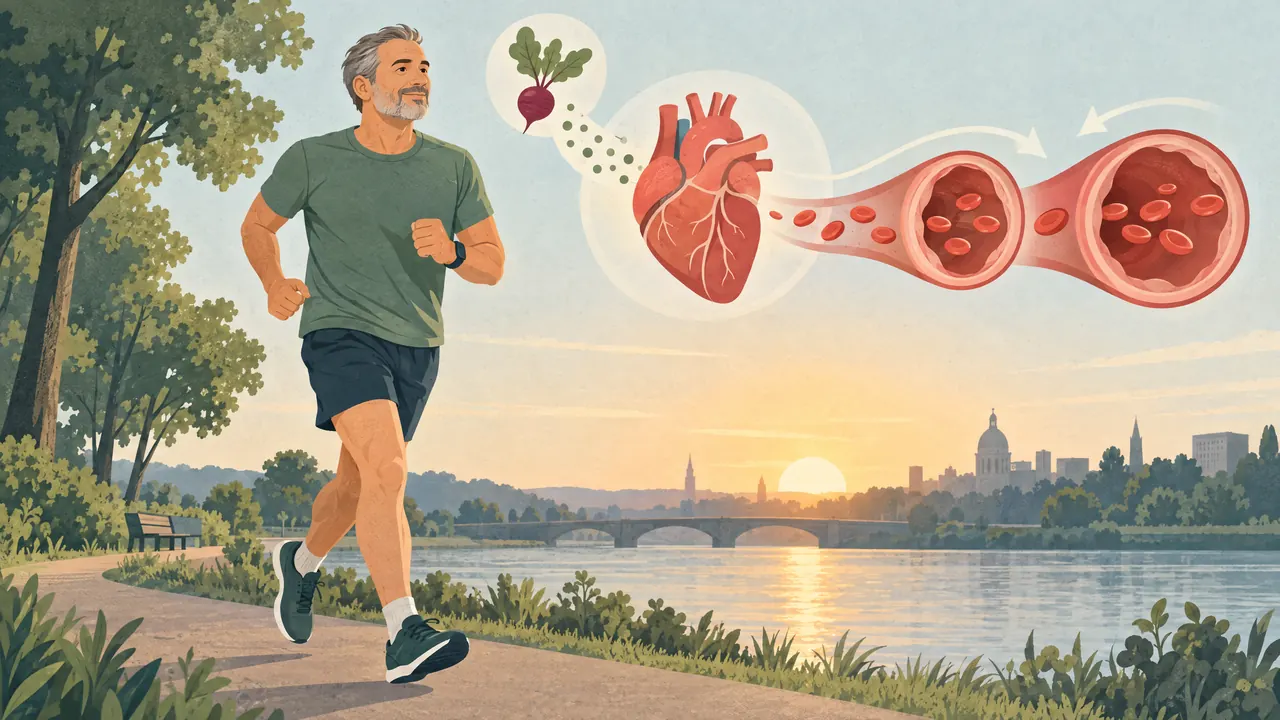
After you consume nitrate, your body absorbs it and returns some of it to your saliva. Bacteria in your mouth convert nitrate into nitrite. Further reactions in your stomach and tissues can then produce nitric oxide, a signaling molecule that helps blood vessels relax.
This pathway matters because relaxed blood vessels allow blood to move more easily. During exercise, nitrate may also influence how efficiently muscles use oxygen.
A review by Lundberg, Weitzberg, and Gladwin in Nature Reviews Drug Discovery (2008) described this nitrate–nitrite–nitric oxide pathway and its role in cardiovascular physiology. It’s a plausible mechanism, not a promise that every serving will produce a noticeable benefit.
There’s a practical wrinkle: antibacterial mouthwash can interfere with the oral bacteria involved. Govoni and colleagues, writing in Nitric Oxide (2008), found that antibacterial mouthwash markedly reduced nitrite production after a dietary nitrate dose. Don’t stop prescribed dental treatment to chase a supplement effect; ask your dentist if you have questions.
Whole beets or beet juice?
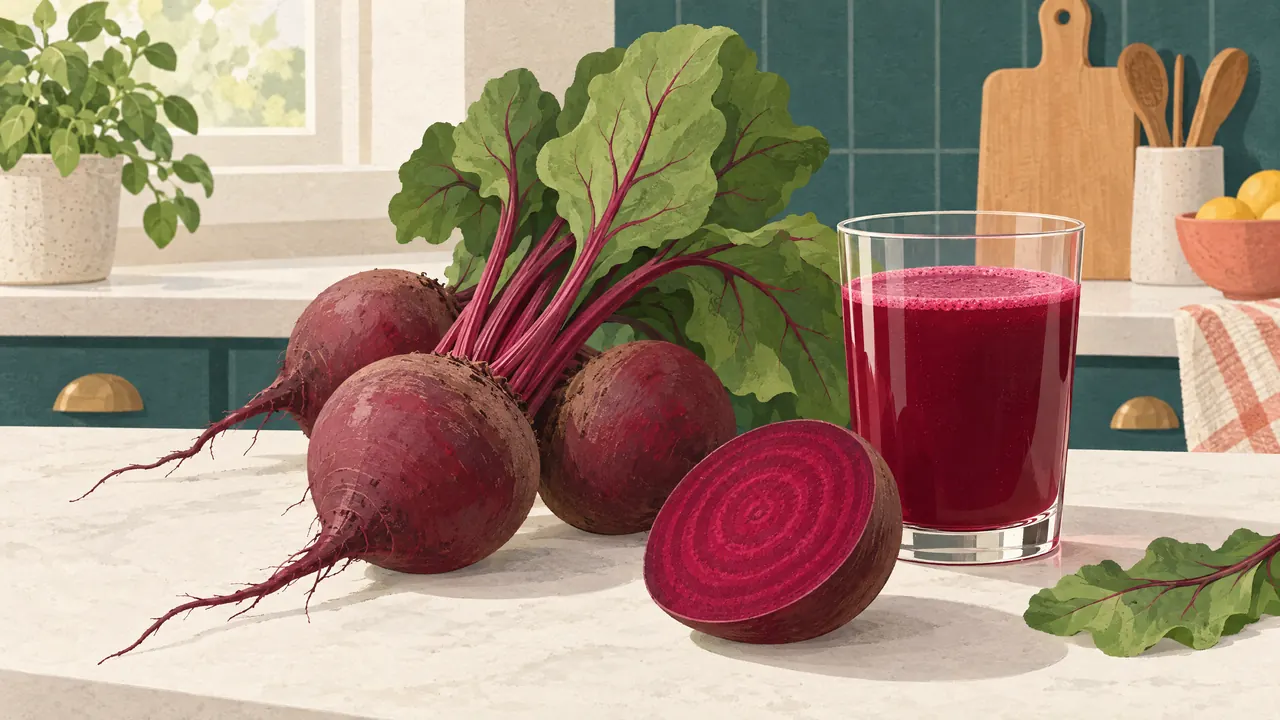
Whole beets offer fiber and fit easily into meals. Juice is a more convenient way to consume a concentrated nitrate dose, but nitrate content varies with growing conditions and processing. A bottle’s volume alone doesn’t tell you its nitrate content.
For everyday nutrition, try roasted beets in a grain bowl or grated raw beets in a salad. If your interest is hormonal health, our guide to foods for hormonal balance explains why an overall eating pattern matters more than one “superfood.”
Two cautions belong here:
- Beeturia: Beets can turn urine pink or red. Stool may change color, too. This can be harmless, but unexplained discoloration, pain, clots, or redness that persists after avoiding beets needs medical assessment.
- Kidney stones: Beets contain oxalate. If you’ve had calcium oxalate stones, discuss frequent beet juice use with your clinician or dietitian rather than assuming a concentrated daily drink is appropriate.
Can beetroot lower blood pressure?
Say your home blood pressure readings remain above your clinician’s target, and you’re wondering whether a daily glass of beet juice could help. It might provide a modest additional effect. It shouldn’t replace prescribed medication or an evaluation of persistently high readings.
The best-known research involves nitrate-rich juice rather than ordinary portions of cooked beets.
Kapil and colleagues reported a randomized, placebo-controlled trial in Hypertension (2015) involving 68 adults with hypertension. Participants received 250 milliliters of nitrate-rich beetroot juice daily for four weeks or nitrate-depleted beetroot juice. The nitrate-rich group had a reported reduction in clinic systolic blood pressure of 7.7 mmHg compared with placebo.
Systolic pressure is the top number. That reduction is meaningful, but it’s one trial—not an expected result for everyone. Participants included adults taking blood pressure medication and adults who weren’t, and the findings weren’t specific to men.
A systematic review and meta-analysis by Siervo and colleagues in The Journal of Nutrition (2013) also found that inorganic nitrate and beetroot juice supplementation reduced systolic blood pressure. Long-term evidence on outcomes such as heart attacks is much less established.
Use your readings, not how you feel, to judge blood pressure. Hypertension often has no obvious symptoms. If you and your clinician decide to try beet juice, keep your medications unchanged unless instructed otherwise and record home readings under consistent conditions.
Practical considerations include:
- Check the label for added sugar and serving size.
- Tell your clinician if you already have low blood pressure or take medicines that lower it.
- Report dizziness, faintness, or unusual weakness, especially after adding a concentrated juice or supplement.
But don’t let beet juice distract from measures with broader evidence: regular activity, reducing excess sodium, limiting alcohol, and treating sleep apnea when present.
Does beetroot help erections or raise testosterone?
Say you’ve started having trouble maintaining an erection and see beet juice described online as “natural Viagra.” The nitric oxide connection makes the claim sound convincing. The clinical evidence doesn’t justify that comparison.
Nitric oxide participates in erections by helping smooth muscle relax, allowing more blood into erectile tissue. Prescription PDE5 inhibitors—medicines such as sildenafil—act on a related signaling pathway. Sharing a biological pathway doesn’t make beetroot equivalent to an ED medication.
ED means erectile dysfunction: recurring difficulty getting or keeping an erection firm enough for sexual activity. There isn’t sufficient clinical evidence to recommend beetroot juice as a treatment for it. Nor is there convincing human evidence that eating beets meaningfully raises testosterone.
Research on blood pressure or cycling performance can’t answer those questions. An improvement in one outcome doesn’t establish an improvement in sexual function.
You can still include beets in a heart-supportive eating pattern. That’s a reasonable nutritional choice, particularly because cardiovascular health and erectile function are connected. Our discussion of excess weight and erectile dysfunction explains another part of that relationship.
If erection difficulties keep happening, arrange a medical appointment rather than testing progressively larger juice doses. The American Urological Association’s Erectile Dysfunction Guideline (2018) identifies ED as a potential marker of underlying cardiovascular disease that may warrant evaluation.
A clinician can review blood pressure, diabetes risk, medications, sleep, and possible hormonal symptoms. There’s no need to guess.
Also distinguish dietary nitrate from prescription nitrate medicines, such as nitroglycerin. Prescription nitrates must not be combined with PDE5 inhibitors because blood pressure can fall dangerously. Beetroot isn’t classified as that medication, but you should still discuss concentrated supplements if you take drugs affecting blood pressure.
Beetroot may support endurance, but timing and training matter
Say you’re preparing for a weekend bike ride and want to know whether beet juice will help—and when to drink it. Some people experience a small performance benefit, especially during endurance activity. Others notice nothing.
Jones and colleagues reviewed dietary nitrate and physical performance in the Annual Review of Nutrition (2018). They described evidence that nitrate can improve exercise efficiency and performance under some conditions, with less consistent benefits in highly trained endurance athletes.
The proposed advantage is better oxygen economy: your muscles may perform the same work using less oxygen. That doesn’t mean beet juice builds muscle, replaces carbohydrates, or compensates for inadequate training.
For a pre-exercise trial, drinking nitrate-rich beet juice about 2–3 hours before activity is a reasonable approach. Wylie and colleagues, in the Journal of Applied Physiology (2013), examined beetroot juice dosing and timing, including the rise in circulating nitrite after ingestion.
Try it before an ordinary training session, not for the first time on race day. Concentrated juice can cause stomach discomfort, and the best timing is useless if the drink upsets your gut.
Look for a product that states its nitrate content; “beet powder” alone doesn’t establish a research-comparable dose. Avoid assuming that more is better.
Keep your usual hydration and fueling plan. Foods discussed in our guide to watermelon benefits for men can add variety, but neither watermelon nor beetroot replaces adequate fluids, food, and recovery. Beet juice is an optional training aid—not the foundation of better endurance.
What does beetroot add to your everyday diet?
Say you’re eating beets more often but usually have them as juice alongside a rushed breakfast. You may be getting dietary nitrate, yet missing an opportunity to improve the meal itself. For general health, the foods you pair with beetroot matter more than chasing a concentrated dose.
Whole beets contribute fiber, folate, and potassium. Fiber supports bowel regularity, while folate helps your body make DNA and supports normal cell division. These are ordinary nutritional benefits—not effects unique to men.
You don’t need an elaborate recipe. Try these combinations:
- At lunch: Add cooked beets to lentils, leafy greens, and olive oil.
- At dinner: Serve them alongside fish, chicken, tofu, or beans.
- For a quick side: Toss sliced cooked beets with plain yogurt and herbs.
- For convenience: Choose ready-cooked or canned beets and compare sodium on the labels.
Pickled beets can fit, too. But the brine may add substantial sodium or sugar, depending on the recipe. If blood pressure is your main concern, compare products rather than assuming every beet preparation serves the same purpose.
And don’t confuse beetroot’s reputation with a complete recovery meal. After demanding exercise, you still need enough food, including protein and carbohydrates. Adding beets to a balanced meal is more useful than letting a juice bottle stand in for lunch.
There’s another trade-off with juice: it generally provides less fiber than whole beets, and large portions can add calories without keeping you full. Use whole beets as food first; treat concentrated juice as a separate choice with a specific purpose.
A history of kidney stones changes the advice
Say you’ve previously passed a calcium oxalate stone and now plan to drink concentrated beet juice every morning. The relevant question isn’t whether beetroot is “healthy.” It’s whether that habit fits your particular stone-prevention plan.
Stone type matters. Calcium oxalate stones, uric acid stones, and other varieties don’t all call for the same dietary changes. If you don’t know which type you had, ask whether your stone analysis or previous testing can clarify it.
For calcium oxalate stones, advice may include limiting high-oxalate foods, maintaining adequate dietary calcium, reducing sodium, and drinking enough fluid. Your urine results can help determine which changes deserve priority.
Avoid cutting out calcium on your own. Calcium eaten with meals can bind oxalate in the digestive tract, reducing how much reaches the urine. That’s different from assuming calcium supplements are appropriate for everyone.
Borghi and colleagues, in The New England Journal of Medicine (2002), studied men with recurrent calcium oxalate stones and high urinary calcium. A diet with normal calcium and reduced salt and animal protein prevented recurrence more effectively than a low-calcium diet. The finding supports a broader prevention plan—not a blanket instruction to avoid calcium-containing foods.
Before making beet juice a daily habit, useful questions for your clinician include:
- What type of stone did I have?
- Do my urine tests suggest that dietary oxalate needs attention?
- Should I limit beets, concentrated juice, or both?
- What fluid intake is appropriate given my other medical conditions?
If you have chronic kidney disease or have been told to restrict potassium or fluids, ask about beet products before using them regularly. A sports-oriented drinking plan may conflict with your medical needs.
Seek prompt care for severe flank pain, fever, vomiting, or difficulty passing urine. Those symptoms need assessment, not another dietary experiment.
How to judge a beetroot supplement without chasing bigger doses
Say you find a beet powder advertised for “male vitality,” with a large scoop size but no nitrate amount. The package sounds relevant to your goals, yet it doesn’t give you enough information to compare it with research.
The weight of beet powder isn’t the same as its nitrate content. Processing and formulation can change what a serving delivers. A blend containing several ingredients also makes it harder to identify what caused either a benefit or an unwanted effect.
Start with the label. Check the serving size, nitrate information if provided, other active ingredients, and any independently verified quality certification. Such certification can help assess product quality; it doesn’t establish that the product improves erections, testosterone, or athletic performance.
Maughan and colleagues’ International Olympic Committee consensus statement in the British Journal of Sports Medicine (2018) emphasized that sports supplements can carry risks, including contamination, and should be assessed carefully before use. That concern matters especially if you compete under antidoping rules.
For a personal trial, keep the question narrow: “Does this help my usual cycling session?” is more useful than “Does this improve men’s health?”
Use a brief log:
- Record the product and serving you used.
- Note sleep, food intake, and workout conditions.
- Track a relevant outcome, such as your time on a familiar route or perceived effort.
- Record stomach symptoms or lightheadedness.
Don’t change several supplements at once. Otherwise, you won’t know which change mattered. A faster ride with a strong tailwind also isn’t persuasive evidence of a supplement effect.
If you notice no clear benefit, there’s no obligation to continue. A supplement that adds expense or discomfort without a useful result isn’t earning its place.
Beetroot is useful food, not a treatment for male health problems
Say you want one practical decision after reading competing claims: should beets stay on your grocery list? If you enjoy them and they fit your medical needs, yes. You don’t need to turn them into a daily supplement routine.
The sensible next step depends on your purpose. For everyday nutrition, include beets among a variety of vegetables. For a specific exercise goal, consider a cautious, clearly defined trial. For persistent erection difficulties or abnormal blood pressure readings, make medical assessment the priority.
Keep expectations proportional to the evidence. A food can support a healthy eating pattern without correcting a hormone problem, treating disease, or noticeably improving every workout.
So choose the version you enjoy, check any relevant precautions, and judge concentrated products by their actual contents—not their promises. Beetroot can be a useful addition to your routine. It doesn’t need to become the centerpiece.
Frequently asked questions
Can beetroot juice lower blood pressure in men?
Nitrate-rich beetroot juice may modestly lower blood pressure, although results vary and research is not specific to men. It should not replace prescribed medication, and people taking blood pressure medicines should discuss concentrated juice use with their clinician.
Does beetroot improve erections or boost testosterone?
There is insufficient clinical evidence to recommend beetroot as a treatment for erectile dysfunction or to show that it meaningfully raises testosterone. Recurring erection difficulties deserve medical assessment because they can signal underlying cardiovascular disease.
When should men drink beetroot juice before exercise?
Drinking nitrate-rich beetroot juice about 2–3 hours before exercise is a reasonable approach to test during training. Some people experience small endurance benefits, but effects are less consistent in highly trained athletes and juice can cause stomach discomfort.
Is beetroot juice safe to drink every day?
Daily concentrated beetroot juice may not suit everyone, particularly people with low blood pressure or a history of calcium oxalate kidney stones. Beets contain oxalate and can turn urine or stool red; persistent or unexplained discoloration needs medical assessment.